**AI Startup Discovered Materials Raises $9M to Design Cooler, More Efficient Chips Using AI Agents**
By admin | Aug 10, 2026 | 3 min read
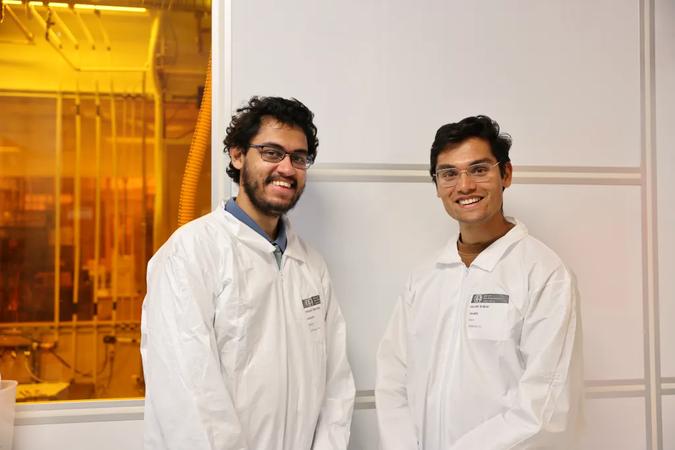
Processors running AI workloads generate intense heat, which is a major reason data centers guzzle electricity and rely on elaborate cooling systems. Naturally, some entrepreneurs are now turning to AI to fix a problem AI itself helped create. The latest example is Discovered Materials, a startup planning to deploy fleets of AI agents to identify novel substances that could lead to more efficient integrated circuits.
The company just announced a $9 million seed round led by Lightspeed India Partners, following its stint at Y Combinator. Peak XV Partners also participated, along with angel investors Paul Graham, Gokul Rajaram, and Thariq Shihipar. Founders Advaith Sridhar and Akash Ramdas launched the venture by combining Ramdas’ doctorate in materials science from Stanford with Sridhar’s background building agents at Persona AI and Luma Labs. Their software pipeline uses Anthropic models inside a custom framework to generate material leads, then relies on physics-based models they’ve trained to run simulations and check whether those candidates are genuinely promising. “We’re able to do thousands of guesses a day now by having these agents run 24/7 on the cloud, exploring research directions that he gives them.”
Today, Discovered Materials is publishing examples of hundreds of new materials, along with its “Material Discovery Bench,” a tool designed to track how frontier models handle this challenge. Rivals like MatNex, SandboxAQ, and CuspAI are pursuing similar goals, but Discovered Materials believes its narrow focus on semiconductor heat issues gives it an edge. The startup claims it has already found several materials matching the properties of substances currently used by major chipmakers, though it’s not sharing specifics yet. One major hurdle is the engineering trade-space: a material that reduces heat generation or improves dissipation might be too hard to manufacture into a chip, or its electrical characteristics could suffer. “A material is only useful in the real world if all of them converge at once, which is what makes this a really interesting search problem.”
Mohapatra predicts that predicting novel substances will eventually become a commoditized service as models keep improving. What sets Discovered Materials apart, he argues, is Ramdas’ deep domain expertise and the ability to run a lab that can rapidly test and validate candidates—something the founders say they’ve already done with several new materials. When valuable leads emerge, Sridhar says the company will try to patent either the use of those materials in GPUs or the manufacturing process for turning them into chips, then license the technology to chipmakers. He hopes to have patent-worthy materials within the next year.
Still, despite the buzz, no AI-discovered drug or material has yet made a real commercial impact. The closest example might be Insilico Medicine’s Renterosib, the first generative-AI-discovered drug to reach Phase II clinical trials. On the materials side, promising candidates exist—like MatNex’s rare-earth-free permanent magnets or new semiconductors from Panasonic and Citrine Informatics—but none have been deployed at scale commercially. These methods may be maturing as AI advances, but Mohapatra believes finding candidates isn’t the real bottleneck. Instead, he says, “filtering them correctly and synthesizing them is the bottleneck.”
Sridhar acknowledges that while Discovered Materials’ unique data and expertise could help it compete against well-funded frontier labs, the reality is that “a lot of this will involve actually going into wet labs and like making things as well. And this is the process that cannot be sped up.”
RELATED ARTICLES


Comments
Please log in to leave a comment.

No comments yet. Be the first to comment!