AI Startup Hang Ten Systems Founded by Ex-Infosys CEO Vishal Sikka Raises $53M, Total Funding Hits $85M
By admin | Sep 16, 2026 | 4 min read
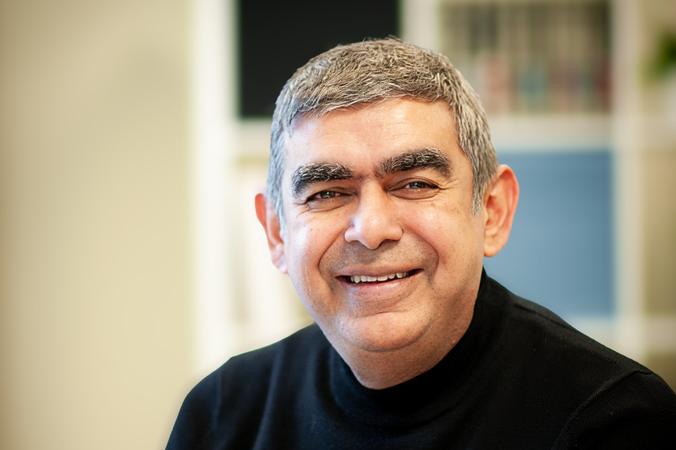
Hang Ten Systems, a four-month-old AI venture established by Vishal Sikka, the former CEO of Infosys, has just added $53 million to its seed funding. This latest round was spearheaded by Xora, the early-stage investment arm of Temasek, bringing the company's total capital raised to $85 million. Mayfield, which had led the prior investment, returned to participate, alongside a roster of notable backers including Aramco Ventures, Intel CEO Lip-Bu Tan, Micron CEO Sanjay Mehrotra, and Yahoo co-founder Jerry Yang, who also sits on the board.
Launched in May, Hang Ten is wagering that artificial intelligence can radically transform the way large corporations develop and sustain their software. The company provides AI strategy guidance to businesses—generally those generating over $10 billion in annual revenue—and also assists in creating and upgrading their software systems. Sikka contends that AI is moving the center of gravity in software development away from coding and toward specifying requirements and verifying that systems behave as intended.
That proposition seems to be landing well with clients. Sikka recounted that within just 25 days of an initial meeting with one customer, Hang Ten inked a multimillion-dollar deal to construct a mission-critical software system—a pace of enterprise dealmaking he said he had never witnessed before. The startup is currently engaged with a blend of existing clients and late-stage prospects across 21 major enterprises, Sikka noted, with some prospects in the proposal or contract-negotiation phase. Hang Ten has already locked in multiple seven-figure contracts and is chasing eight-figure opportunities.
Its customer base stretches across the U.S., Europe, the Middle East, and Asia, and includes names like Fresenius Kabi, Saudi Aramco, and Siemens Energy. These early wins were what prompted Xora to reach out to Hang Ten about investing, according to Sikka, who added that Xora recognized a chance to connect the startup with other companies in Temasek's portfolio. Sikka would not reveal Hang Ten's valuation but described the second seed round as an increase over the first.
With the new funding, Hang Ten intends to grow its engineering, consulting, and sales teams. The Palo Alto-based company presently employs roughly 20 to 25 people across the U.S., the Middle East, and Australia, and plans to hire in Europe and India, Sikka said. Hang Ten is stepping into a competitive landscape where AI model builders like OpenAI and Anthropic are broadening their enterprise services, while established consulting firms are hurrying to weave generative AI into their offerings.
"Enterprises still need trusted partners who are independent of the underlying platform and who work with and solely in the interest of the enterprise," Sikka said. "There will always be room for companies like us."
Hang Ten maintains that its advantage isn't in creating yet another AI model, but in tailoring AI to the intricate software development workflows of big organizations. "We are actually delivering production software," Rajagopalan said. "It's not like we are doing some kind of PoC."
Hang Ten's strategy is already bringing it into competition with conventional systems integrators. Sikka said many of the startup's engagements involve displacing incumbent providers, though more than half of its current opportunities are new projects that companies had previously deferred, rather than work poached from existing vendors. Rajagopalan pointed out that Hang Ten can deploy teams of just two to four people on some projects that might once have needed around 30, although customers or independent third parties still conduct final quality checks and certification. The startup pledges customers a tenfold improvement in cost, speed, or a combination of both, he said.
He declined to name the prospective buyers. The startup, he said, has turned them down for now as it focuses on expanding the business. Before starting Hang Ten, Sikka co-founded the enterprise AI startup VianAI in 2019 after departing Infosys in 2017. That company raised $50 million in seed funding and later secured $140 million in a 2021 round led by SoftBank Vision Fund 2. Sikka left that startup in April, according to his LinkedIn profile.
As for how startups like Hang Ten might disrupt service providers such as Infosys, Sikka observed, "We are fortunate that we don't have the burden of legacy that we have to transform."
The startup draws its name from "hang ten," the surfing move in which a rider stands with all 10 toes over the front edge of the board. For Sikka, it captures the startup's goal of helping enterprises ride the current AI wave—what he called "probably the biggest wave of our lives."
RELATED ARTICLES
Comments
Please log in to leave a comment.

No comments yet. Be the first to comment!