Librarians Teach How to Disable Apple Intelligence and Gemini in Hands-On Phone Privacy Workshop
By admin | Jul 25, 2026 | 10 min read
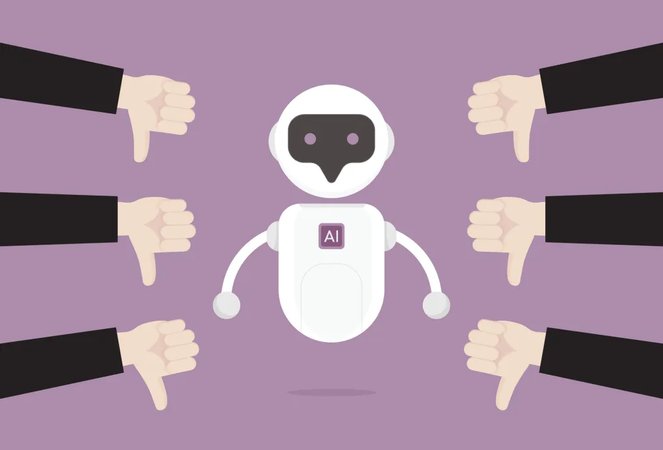
“Everyone’s glued to their phones at my session,” joked Charlie Bailey, a librarian based in South Philadelphia. He had just asked his audience to pull out their devices so he could demonstrate how to disable Apple Intelligence and Gemini. Bailey stands at the front of a library classroom designed for children—the room’s centerpiece is a bright rug reminding everyone that M stands for “moon” and Z stands for “zebra.” But the roughly 20 adults in attendance aren’t here to learn the alphabet. They’ve come for a workshop called Avoiding AI, which, in this case, has nothing to do with apples or igloos. Bailey kicks off the hour-long session by explaining how AI chatbots and other consumer AI tools function, outlining why people might want to use these products and why they might choose to steer clear. Then, he methodically goes through the most popular tech platforms and devices, projecting step-by-step instructions to help attendees turn off specific features. “As a librarian, I see this as advancing digital literacy and helping people regain control over whether they want to use AI tools,” Bailey said. “It’s crucial, especially when it’s so hard to avoid them and when the design seems to push adoption.”

Bailey got the idea for the Avoiding AI workshop from Hannah Cyrus, a librarian in Maine. He was among dozens of librarians worldwide who reached out to Cyrus after she published a journal article about developing her own workshop. “Nobody has ever emailed me asking for my Intro to Computers slides,” she noted.
At the Bangor Public Library, patrons turn to Cyrus for help with anything tech-related. “Increasingly, I was getting questions like, ‘How do I turn this AI stuff off? Why is it trying to write my emails? Why is it summarizing my one-sentence email that I can easily read?’” Cyrus said. “With so much media hype around AI products, I thought it would be a great chance to teach people the basics of what happens when you use this technology, and then show them how to disable it if they don’t want it.” Typically, Cyrus’ classes like Intro to Computers draw about a dozen attendees. But interest in her first Avoiding AI workshop was so high that she had to cap registration at 30, start a waitlist, and offer the session via Zoom. Including the livestream, roughly 70 people attended each of Cyrus’ first two workshops. When Bailey followed her lead in Philadelphia, the response was equally unprecedented. The library’s Instagram post about the Avoiding AI event racked up over 2,000 likes and 220 shares—compared to most posts, which barely get a few dozen likes. He scheduled a second session because the first one was oversubscribed.
“As an information professional, it’s gratifying to see people skeptical of AI,” Bailey said. “It felt really good to see how many people share that feeling.” There’s a sense of camaraderie among the strangers in the room during the workshop. When Bailey invites attendees to share their own tips, one person explains that adding “&udm=14” to a Google search hides AI results. Bailey scribbles the string of characters on a whiteboard next to the login credentials for the teen Wi-Fi network. “You go through all the trouble to buy a home these days, and two years later, there could be a data center next to your house,” says an attendee named Johnny. “I keep getting AI shoved down my throat at work, and every time I see it, I think about the environment,” adds another attendee, Gabrielle. But she’s not dismissing AI entirely. “I’m not against AI when it comes to medical breakthroughs.”
AI critics recognize that this technology extends far beyond chatbots and deepfake apps. Cyrus mentioned how useful optical character recognition is for scanning old documents at the library. But for her and her workshop attendees, the anti-AI movement isn’t about rejecting technology outright—it’s about advocating for more control, agency, and freedom in how people use it. “I think the forced adoption of AI on people’s devices might be the straw that breaks the camel’s back, in some ways,” she said. “Awareness has been growing for a long time that these products and the companies that make them have an outsized influence over us, and that we’re not really using these products the way we’d like to.”
RELATED ARTICLES



Comments
Please log in to leave a comment.

No comments yet. Be the first to comment!