Data Center Power Surge: How a Downed Power Line Near DC Exposed Grid Vulnerabilities
By admin | Jul 25, 2026 | 3 min read
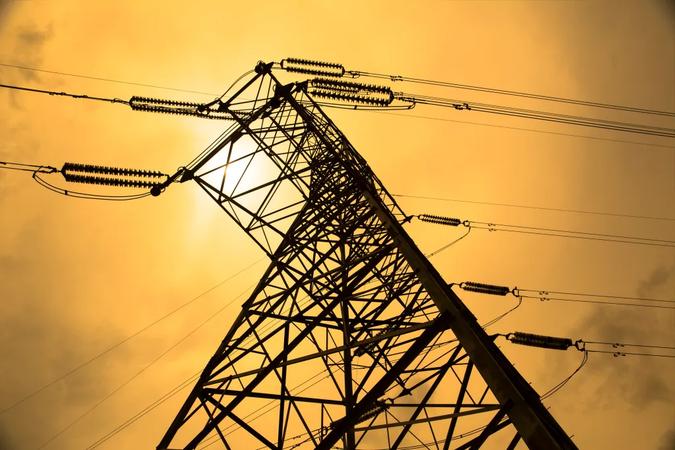
A downed power line outside Washington, DC, this week triggered an unusual chain of events that exposed the growing strain data centers place on the electrical grid. Normally, the system recovers from such an incident in just a few seconds. However, this time it took over ten minutes to stabilize because more than three gigawatts of data center load disappeared nearly all at once.
The voltage across the PJM grid—which stretches from Northern Virginia to Chicago—spiked as a result, according to data collected by Ting Labs, a startup that monitors power quality through IoT sensors installed in people's electrical outlets. Although no blackout occurred, lights flickered across the region. The incident highlights how data centers, especially in areas like Northern Virginia—home to the world's densest concentration of such facilities—can disrupt grid stability. Experts warn that this kind of event will become increasingly common.
"It's the canary in the coal mine," said Ricardo de Azevedo, CTO of ON. Energy. He noted that incidents involving large loads like data centers are "happening more and more." This event echoes a similar one two years ago on the same PJM grid, and it could foreshadow more serious problems if data centers are not designed to handle power disruptions more gracefully.
PJM Interconnection manages the grid for 67 million customers from New Jersey to Illinois, making it the largest grid operator in the United States. When the power line went down, data centers automatically switched to backup power, causing about 3.1 gigawatts of load to vanish in roughly 30 seconds. The grid partially recovered, but additional loads dropped off shortly after. At its peak, the grid had an extra 3.49 gigawatts of electricity flowing through it. It took another 11 minutes for the system to fully stabilize.
The disconnected data centers represented around 3% of PJM's total demand at the time, according to Reuters. While a few percent may seem small, the electrical grid requires near-perfect balance between supply and demand. Even minor fluctuations can cause voltages to sag or spike. The grid and connected equipment can tolerate small variations, but larger swings trigger failsafes, causing facilities to disconnect. In this case, when data centers in Northern Virginia sensed the voltage fluctuation, they switched to backup power, removing their load from the grid. As more data centers followed suit, the drop in demand grew, causing supply to surge and lights to flicker.
Most data centers make split-second decisions, and those that disconnected this week were no different. "We need to figure a way for these loads that are located next to each other to sequentially either disconnect or reconnect," de Azevedo said. A more orderly process would allow grid operators to develop robust procedures in advance. Alternatively, data centers could be built to absorb disruptions rather than isolate themselves from them.
One startup, ON. Energy, has developed a product designed to help data centers and the grid ride through such events. The company has created an uninterruptible power supply for entire data center campuses, covering servers, chillers, and other equipment. The system essentially hides the data center behind a bank of batteries connected to sophisticated power conversion equipment. From the grid's perspective, the data center appears as a single, consistent load rather than a series of peaks and valleys.
ON. Energy's system allows data centers to adjust computing workloads—including AI training—without disrupting the grid. More importantly, it enables data centers to absorb power fluctuations. Instead of disconnecting, the system can use extra power to charge its batteries and dispatch stored energy when supply dips. It can respond within milliseconds, preventing the sags and surges that caused this week's problem. De Azevedo said ON. Energy is currently installing a total of 3 gigawatts of its systems at four different data center campuses.
Grid operators are also waking up to the issue. For example, ERCOT plans to require large loads like data centers to "ride through" disruptions, de Azevedo noted. But time is running out. This week's mass disconnection was twice as large as a similar event in 2024, when 60 data centers simultaneously disconnected, pulling 1.5 gigawatts of load from the grid. At that time, data centers accounted for about 6% of PJM's load, according to Synapse Energy Economics. By 2040, they are expected to make up 24%. If the problem is not addressed soon, things could get much worse.
RELATED ARTICLES


Comments
Please log in to leave a comment.

No comments yet. Be the first to comment!