Nvidia Agrees to Acquire Hugging Face for $12.9B in Landmark AI Deal
By admin | Aug 27, 2026 | 4 min read
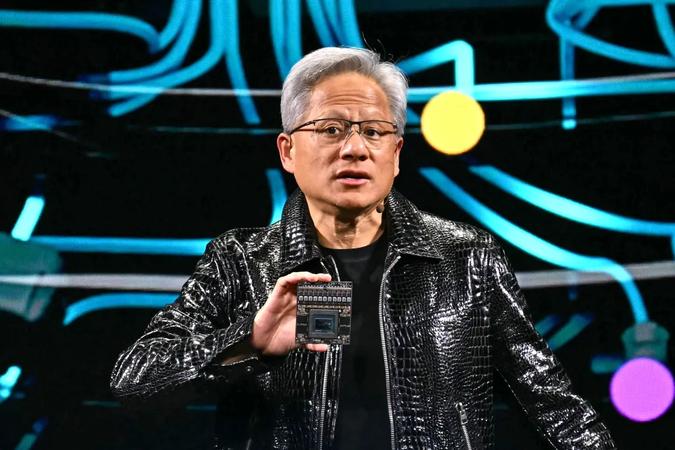
Nvidia has reportedly agreed to acquire Hugging Face for $12.9 billion, according to a Wednesday evening report from The Information, which cited a source familiar with the matter. Business Insider, which first reported over the weekend that Hugging Face was attracting takeover interest, noted Wednesday night that the discussions—which would place the company's valuation above $13 billion—had not yet resulted in a signed agreement and could still fall apart. Notably, Nvidia has remained silent on the matter, which is significant given the company's history of quickly addressing reports it deems inaccurate.
Perhaps this outcome was inevitable from the beginning. Founded in 2016, Hugging Face has become one of the most prominent platforms where developers share and download open-source AI models. Acquiring it would give Nvidia a solid foothold in the open-source AI space, particularly at a time when open-source developers are striving to close the gap with closed AI systems from companies like Anthropic and OpenAI. Why would Nvidia pursue this? Most clearly, it comes down to protecting its dominance in AI chips—a position that, from an outside perspective, appears increasingly vulnerable despite Nvidia's aggressive chip-release schedule. Nearly all of the major closed-source AI labs (OpenAI, Google, Amazon, and Anthropic) are currently developing their own AI chips to reduce their dependence on Nvidia. A thriving ecosystem of open-source AI models would offer customers more alternatives to those closed labs, thereby keeping a larger portion of the market reliant on Nvidia's hardware. This is also why Nvidia has already invested tens of billions of dollars in building its own open-source AI models.
Should we be surprised that Hugging Face's time as an independent entity seems limited? Not really. Hugging Face CEO Clem Delangue has spent much of this year publicly supporting Nvidia's open-source push, amid a debate that has been intensifying for months as Washington officials reportedly considered restrictions on open-weight models. After Chinese labs like Moonshot AI released systems such as its Kimi K3 model, which matched leading U.S. models on benchmarks while costing significantly less to operate, concerns about competition and national security appeared to grow in Washington. Some critics of closed labs, like White House advisor David Sacks, suggested these fears were being amplified by the "duopoly" of Anthropic and OpenAI.
In an appearance on CBS's "Face the Nation" earlier this month, for example, Delangue stated that Hugging Face used an Nvidia-modified version of a Chinese open-source model to defend itself after a cyberattack. He also pointed to a recent letter—signed by Nvidia CEO Jensen Huang and 24 other companies, including Hugging Face—urging the U.S. government to support open models rather than restrict them. In a separate CNBC interview in late July, Delangue made similar arguments, referencing that same letter while cautioning that China is "clearly dominating" open-source AI.
The deal would also represent something of a resurgence for Nvidia in cloud computing. Nvidia reportedly scaled back its own cloud business, called DGX Cloud, about a year ago. However, according to The Information, owning Hugging Face—which already assists developers in running their AI models using rented computing power—could offer Nvidia a way back into that market without having to start from scratch. There's also a financial safety net in play. Nvidia has pledged to help cover the costs of tens of billions of dollars in cloud computing deals for its customers. If those customers end up not using all the computing power they committed to, Nvidia could be left with it. Acquiring Hugging Face would give Nvidia the ability to sell that unused capacity to Hugging Face's customers.
The price represents a substantial leap from Hugging Face's last known valuation. The company raised $235 million in 2023 in a funding round that valued it at $4.5 billion. That round was led by Salesforce Ventures, with additional investment from Alphabet's GV, IBM Ventures, and Nvidia itself, among others. This wouldn't be Hugging Face's first encounter with an Nvidia offer, either. Hugging Face declined a $500 million investment proposal from Nvidia late last year that would have valued it at $7 billion, as previously reported by the Financial Times. At the time, Hugging Face stated it didn't want a dominant investor that could influence its decisions.
As for why it might say yes now, one could argue that a buyout differs from taking on a single large backer—a situation that often involves relinquishing control while facing pressure to keep growing. Hugging Face is also still a relatively small business in terms of revenue within the AI landscape. The Information reported it was recently generating about $150 million in annual revenue, up from roughly $100 million just two months earlier. Still, a price near $13 billion would represent a massive multiple for a company of this size and would be difficult to turn down. Additionally, the deal would grant Hugging Face access to Nvidia's much deeper financial resources just as other AI infrastructure competitors begin to be absorbed into larger organizations, as suggested by Stripe's recent acquisition of OpenRouter—a startup founded in early 2023 that helps customers choose different AI models for various tasks based on their needs and budgets. OpenRouter was valued at just $1.3 billion back in May during its Series B round. Stripe reportedly paid more than $7 billion to acquire it earlier this month.
RELATED ARTICLES


Comments
Please log in to leave a comment.

No comments yet. Be the first to comment!