Nvidia Stock Drops 15% From Peak: Why AI Investors Are Paying Less for the Chip Giant's Future Profits
By admin | Jul 09, 2026 | 6 min read
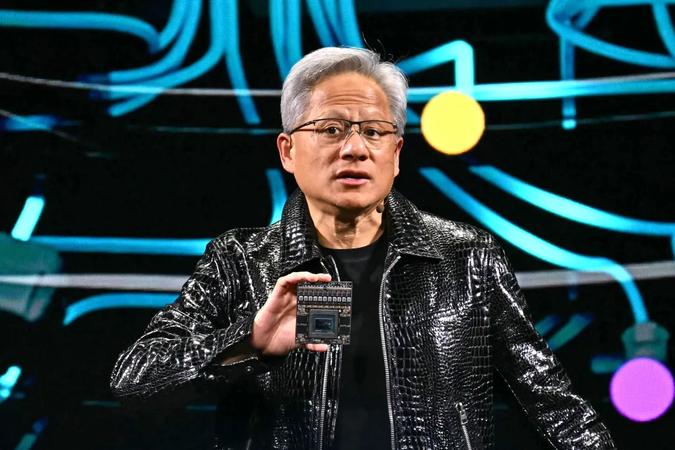
Nvidia, long the undisputed leader of the chip industry, has endured a rough stretch over the past few months. Bloomberg provides the unflattering details, but the key takeaway is that the company's stock has dropped 15% from its May peak, even as projected revenue continues climbing. Relative to expected earnings, Nvidia is now cheaper than the average S&P 500 stock—investors are paying less for each dollar of Nvidia's anticipated profit than they do for a typical large American company. Money is still pouring into AI infrastructure stocks, but it's increasingly flowing toward memory manufacturers. Over the same period, Micron—one of the world's largest producers of DRAM, the standard memory chip found in computers and servers—has nearly tripled in value. This has made memory the new bottleneck for data centers and the hottest AI trade around.
The fundamental reason is straightforward: the GPU shortage that seemed so alarming last year has eased somewhat. Meanwhile, data centers are consuming memory as fast as they can buy it. For anyone who admires Nvidia's technological achievements, this shift can feel deflating. Nvidia's rise rests on genuinely impressive engineering, from developing CUDA—its widely adopted programming platform that made Nvidia GPUs the default engine for AI research—to pushing GPU development at a pace few thought possible. Nvidia's success is the kind of story you could write entire books about, and its GPUs are among the most complex devices ever created, operating at the very edge of human capability.
For memory companies like Micron, the story is far simpler. They build high-bandwidth memory chips—specialized components designed to shuttle data in and out of processors as quickly as possible—which have been improving incrementally for 20 years. Without the chips or the companies changing much, the service they provide suddenly became extremely valuable. Since demand is growing faster than anyone can scale up supply, they've been able to raise prices tenfold over the past year. Here's what the spot price for DRAM—the price buyers pay on the open market, as opposed to long-term contract rates—has looked like since 2023, according to Datatrack:

You might suspect a major technical breakthrough occurred in the summer of 2025, but no. The industry as a whole simply underestimated how much memory it would need for the data center buildout. For comparison, here's how the spot price for an hour of time on an Nvidia H100 GPU has changed over the last year, via the compute marketplace Ornn:

Like Nvidia's stock price, there's a peak in May (around $3.20 an hour) followed by a steady decline. For better or worse, Nvidia's value as a company is tied to the price of compute—and that price is falling. Micron and its peers are tied to the price of DRAM, which keeps rising. When I spoke with Ornn co-founder and CTO Wayne Nelms about the forces behind this disparity, he framed it as a simple matter of supply and demand. Google, Amazon, Microsoft, and even OpenAI have launched their own custom processors to reduce their dependence on Nvidia; even if those chips aren't as good as Nvidia's latest model, they're good enough to push compute prices down. "More GPU and accelerator players are entering the market. Everyone wants to make their own silicon, but no one is making their own DRAM," Nelms told me. "Until there's a major technological breakthrough on HBM [high-bandwidth memory], a shift in supply and demand, or someone new enters the market in memory, I think things will more or less persist as we see today."
It's a frustrating situation for Nvidia—and largely a product of its own success. By proving how valuable compute can be, the company now finds itself at the center of a market everyone wants to join, while simpler technologies and less interesting companies get rich on the sidelines.
RELATED ARTICLES



Comments
Please log in to leave a comment.

No comments yet. Be the first to comment!