Nvidia Backs $500B AI Data Center Push with GPU Value Guarantee, Creating Secondary Market for Aging Chips
By admin | Aug 13, 2026 | 3 min read
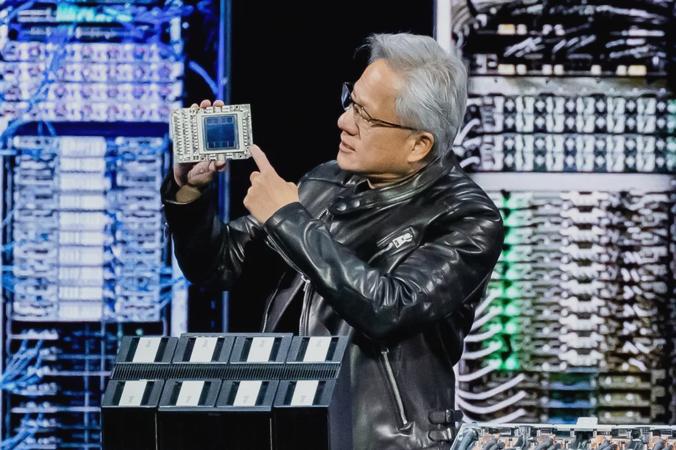
Nvidia revealed this week that Apollo, BlackRock, Blackstone, Brookfield, Goldman Sachs, and KKR were prepared to pour up to $500 billion into AI data center construction. That staggering number grabbed headlines, but the real headline is Nvidia's push to build a secondary market for older GPUs. To win over those heavyweight financial players, Nvidia has pledged its own capital to guarantee that chips used as loan collateral won't lose their value. Plenty of observers have flagged how unconventional, clever, and risky this approach is—and they're right on all counts. The bond markets got rattled enough that Nvidia CEO Jensen Huang took to X and business TV to clarify how the company's exposure would stay contained.
But beneath the financial engineering to fund AI data centers—and keep Nvidia's revenue engine humming—lies something arguably more intriguing for startups and enterprises: Huang wants to cultivate a thriving resale ecosystem for used AI hardware, which would sustain demand for Nvidia gear as it ages. Specifically, Nvidia is committing to cover up to 25% of any shortfall if GPUs used as collateral don't hold their expected value. So, if a data center operator defaults on a loan and the lender has to sell off assets, but the chips fetch less than the books suggest, Nvidia steps in to bridge the gap.
The peril for Nvidia is that this setup creates what financiers call "wrong way" risk—meaning Nvidia's obligations would balloon precisely when demand weakens. If that scenario unfolds, its revenue would likely take a hit too. Still, the scheme is deliberately distinct from the Lucent Technologies comparisons some have drawn. Lucent, the telecom equipment maker, soared and crashed with the dotcom bubble after lending customers money to buy its products. That shadow looms over Nvidia, and Huang knows it. The parallel isn't entirely off-base: Nvidia has already committed billions to buyers of its chips, including frontier AI labs like OpenAI and Anthropic, as well as neoclouds such as CoreWeave—which originated the idea of using Nvidia chips as collateral—plus Nebius, Firmus, and Lambda. Bloomberg has calculated the company has been working on another $750 billion worth of circular deals this summer.
"Is this circular financing?" Huang wrote on X about the new initiative. "This initiative is designed to address that concern. We are bringing independent, long-term institutional capital into the AI infrastructure market."
That's a fair point. Unlike Lucent, Nvidia is getting others to carry most of the financial weight and risk, merely by agreeing to protect a slice of its chips' future value. If the plan succeeds, Nvidia will have unlocked fresh funding sources for AI data center builds, just as traditional avenues are starting to run dry. Some hyperscalers have already piled on debt (Oracle), issued new equity tranches (Google), or burned through massive cash reserves (Meta). The climate has gotten so precarious that Microsoft CEO Satya Nadella recently recommended the book "1873" during his latest earnings call—a history of railroad-era financial engineering that crashed the national economy.
The underlying fear is that today's AI boom, where demand far outpaces supply, won't last much longer. What if we're not in the early innings, and enterprises or consumers start tempering their AI usage? Or what if new technologies make existing infrastructure more efficient—or render today's AI systems obsolete altogether? Then, like buggy whips facing the automobile (to paraphrase Danny DeVito's Lawrence Garfield), demand evaporates and everything collapses.
Yet Huang argues that won't happen, selling a vision of AI as a long-term "investable infrastructure." He frames his AI servers—which he calls "AI factories"—as akin to railroads or airlines rather than quickly depreciating assets like PCs. "When needs change, the factory can be used by another customer, another cloud or another operator. This broad ecosystem gives NVIDIA compute a deep market of potential users and offtakers, helping protect residual value," he promised. In that future, Nvidia cares as much about aging architecture as it does about cutting-edge chips. And perhaps startups, enterprises, and even researchers will tap into a wider variety of hardware, each tailored to different AI needs—just as they're already gravitating toward affordable open-weight models alongside premium frontier options. As the reigning king of AI, Nvidia has both the clout and the window of opportunity to make that vision a reality.
RELATED ARTICLES


Comments
Please log in to leave a comment.

No comments yet. Be the first to comment!