OpenAI Launches GPT-Live-1 Models: More Natural Voice, Full-Duplex Conversations, and Live Translation
By admin | Jul 08, 2026 | 3 min read
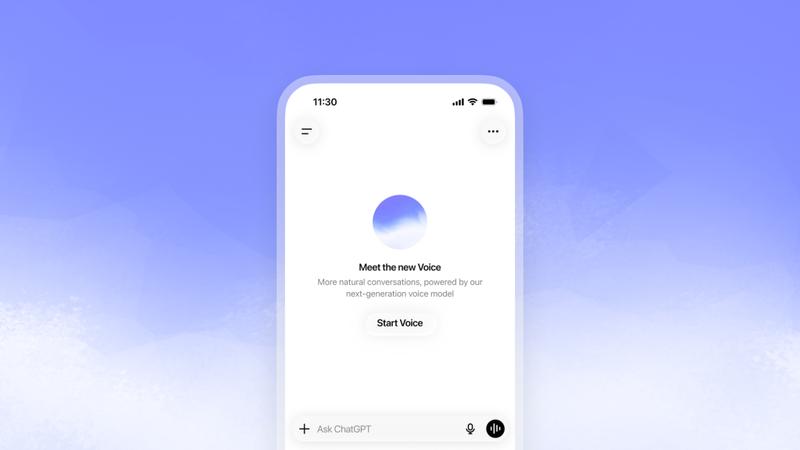
OpenAI has unveiled a new generation of conversational AI models, named GPT-Live-1 and GPT-Live-1 mini, which are designed to sound more natural and manage turn-taking more effectively. These models operate in full-duplex mode, enabling them to simultaneously speak and listen. This allows users to interrupt naturally and supports features like real-time language translation. The company is also rolling out GPT-Live-1 mini as the default replacement for the current Advanced Voice Mode in ChatGPT, while paid subscribers will gain access to the larger GPT-Live-1 model.
The previous system relied on a combination of three separate components: a speech-to-text model for transcribing speech, a large language model for generating responses, and a text-to-speech model for delivering the final answer. In a press briefing, OpenAI explained that the new models address key issues, such as interrupting users while they are speaking and lacking sufficient intelligence to answer questions effectively. The updated models will route queries to the latest text-based models, like GPT-5.5, for enhanced search, reasoning, or agentic capabilities while maintaining the flow of conversation.
EMBED_PLACEHOLDER_0
OpenAI demonstrated that the new model can remain silent for extended periods, absorbing the context of a conversation until it is specifically prompted. Additionally, because the new voice mode integrates with newer GPT models, it can present information in visual formats as well. This trend is also being pursued by other startups, such as Monogram, which recently raised $40 million in seed funding from DST and Lux Capital, focusing on visual responses to make assistants more interactive.
The company stated that the new voice mode in ChatGPT is designed for longer, more sustained conversations. During the briefing, Atty Eleti, product lead for ChatGPT Voice, mentioned that he has engaged in 30- to 40-minute-long conversations with the voice feature while out on walks. OpenAI envisions voice as a potential primary interface for computing, especially for complex tasks. While reports have hinted at the possibility of the company launching AI-capable earbuds this year, no details about hardware products were provided.
“Over time, we think this will also unlock the ability to use voice as a kind of primary interface to computing, and to manage increasingly complex long-running agentic work. The kind of amazing use cases that we see people using Codex and ChatGPT to accomplish, we think voice can be the future interface to all kinds of work,” Eleti said. OpenAI has been working to enhance voice-based features over the past few years to make ChatGPT’s voice mode sound more natural. The company reports that more than 150 million people use features like Voice and Dictation to interact with ChatGPT.
EMBED_PLACEHOLDER_1
Competitors are also striving to make their assistants more expressive. Both Apple and Amazon have updated their assistants to be more conversational with improved context handling. Startups like Sesame, co-founded by Oculus co-founder Brendan Iribe and Ankit Kumar, have launched AI assistants that engage in more natural conversations while completing tasks in the background. OpenAI is moving in a similar direction, aiming to allow users to interact with its assistant hands-free for extended periods.
Despite claiming that the new voice mode sounds more natural, OpenAI emphasized that it is not intended to serve as an AI companion. The company noted that the new models include built-in safeguards to provide age-appropriate responses for teens and to offer resources if conversations touch on topics like self-harm. However, the new voice mode still requires refinement. During a demo of the live translation feature in Hindi, the assistant exhibited a heavy American accent and spoke in an unnatural, slightly bookish tone. The company stated that the new mode is optimized for “most spoken languages,” but did not specify which ones.
RELATED ARTICLES



Comments
Please log in to leave a comment.

No comments yet. Be the first to comment!