OpenAI Unveils Policy Blueprint for Wealth and Work in the Intelligence Age
By admin | Apr 06, 2026 | 4 min read
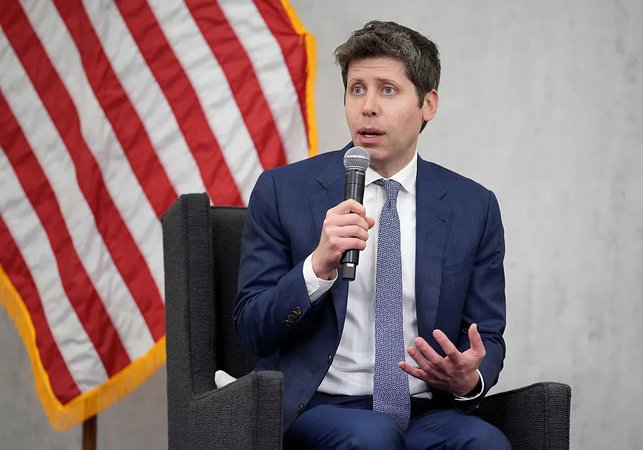
As policymakers consider how to address the economic impacts of advanced artificial intelligence, OpenAI has introduced a series of recommendations for managing wealth and labor in what it terms an “intelligence age.” These ideas combine progressive approaches—such as public investment funds and strengthened social supports—with a core commitment to market-based capitalism.
The proposals arrive during growing public unease about AI, fueled by worries over job losses, increasing inequality, and the rapid expansion of data centers nationwide. Their release also coincides with the Trump administration’s steps toward a national AI strategy and the approaching midterm elections, suggesting an appeal to both political parties.
EMBED_PLACEHOLDER_0
This outreach is accompanied by more overt political activity: OpenAI President Greg Brockman—who has contributed millions to President Donald Trump—along with other technology billionaires, has directed hundreds of millions of dollars into super PACs that advocate for minimal AI regulation.
OpenAI’s framework emphasizes three primary objectives: spreading the economic benefits of AI more widely, establishing protections to limit systemic dangers, and guaranteeing broad access to AI tools to prevent excessive concentration of economic power.
One key suggestion is to move taxation away from labor and toward capital. While the company does not recommend a specific corporate tax rate—Trump previously lowered it from 35% to 21%—it cautions that AI-driven growth could erode the tax revenue that supports Social Security, Medicaid, SNAP, and housing programs as corporate profits rise and dependence on wages declines.
“As AI reshapes work and production, the composition of economic activity may shift—expanding corporate profits and capital gains while potentially reducing reliance on labor income and payroll taxes,” OpenAI stated.
The proposal includes raising taxes on corporate earnings, AI-generated returns, or top-tier capital gains—a policy approach that previously led investor Marc Andreessen to support Trump after President Biden suggested taxing unrealized capital gains in 2024. OpenAI also mentions the possibility of a robot tax, an idea Microsoft founder Bill Gates raised in 2017, where machines would contribute taxes equivalent to the human workers they replace.
Another recommendation is the creation of a Public Wealth Fund to provide all Americans with an automatic stake in AI companies and infrastructure, regardless of personal investment. Returns would be paid directly to citizens, an idea that may resonate with those who have seen AI drive market growth without sharing in its rewards.
Several proposals focus more directly on workers, such as subsidizing a four-day workweek without reducing pay—aligning with tech industry assurances that AI will improve work-life balance. OpenAI also encourages companies to increase retirement contributions, cover more healthcare expenses, and help with childcare or eldercare costs.
Notably, the company presents these as corporate obligations rather than government duties, overlooking individuals whose jobs may be eliminated by automation. If a position is automated, employer-supported healthcare and retirement benefits could disappear as well.
OpenAI does separately suggest portable benefit accounts that move with employees between jobs, though these would still rely on employer or platform funding and fall short of government-guaranteed universal coverage that would fully protect displaced workers.
The company recognizes that AI risks extend beyond employment, including misuse by governments or malicious actors and the potential for systems to operate outside human control. To address these threats, it recommends containment protocols for dangerous AI, new oversight agencies, and specific safeguards against high-risk applications like cyberattacks and biological weapons.
Alongside these protective measures, OpenAI advocates for growth-oriented policies, such as expanding electrical infrastructure to meet AI’s energy needs and accelerating AI development through subsidies, tax incentives, or public equity stakes. It argues that AI should be treated as a utility, with industry and government collaborating to keep it affordable and accessible rather than dominated by a handful of firms.
OpenAI’s framework follows by six months a similar policy outline from competitor Anthropic, which detailed various responses to AI-driven disruption. “We are entering a new phase of economic and social organization that will fundamentally reshape work, knowledge, and production,” OpenAI wrote, calling for a “new industrial policy agenda that ensures superintelligence benefits everyone.”
Originally founded as a nonprofit dedicated to ensuring AI benefits all of humanity, OpenAI transitioned to a for-profit structure last year—a move that has prompted critics to doubt whether its mission can align with the demands of growth and shareholder returns.
The company draws parallels to past periods of economic transformation, such as the Industrial Age, noting how initiatives like the New Deal helped ensure “growth translated into broader opportunity and greater security” through “building new public institutions, protections, and expectations about what a fair economy should provide, including labor protections, safety standards, social safety nets, and expanded access to education.”
“The transition to superintelligence will require an even more ambitious form of industrial policy, one that reflects the ability of democratic societies to act collectively, at scale, to shape their economic future so that superintelligence benefits everyone,” OpenAI concluded.
RELATED ARTICLES



Comments
Please log in to leave a comment.

No comments yet. Be the first to comment!