Plaud Launches AI Note-Taking Earphones, Plaud One: A New Wearable Form Factor for Effortless Voice Capture
By admin | Aug 27, 2026 | 4 min read
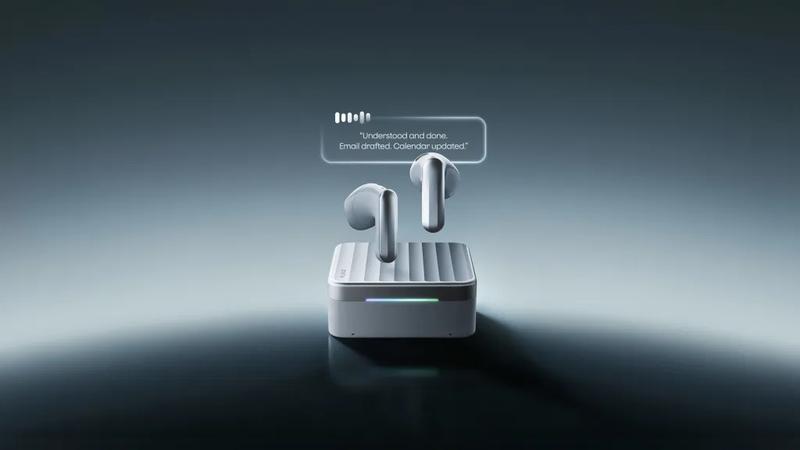
Hardware makers have figured out that note-taking is one of the simplest AI applications to develop, so they've been busy embedding microphones into everything from pendants and rings to credit-card-sized gadgets and wristbands. Yet, despite the flood of devices, only a handful of companies have managed to rise above the noise. Plaud is one of them, boasting over 2.5 million users across its hardware and software. Now, the company is venturing into a new form factor with its latest release: earphones. Dubbed the Plaud One, these earbuds borrow the clean, minimal aesthetic of Apple's AirPods and can capture phone calls, while their charging case doubles as a recorder for in-person chats or note-taking sessions.
Plaud isn't the first to try this approach. Competitors like Viaim and Anker already offer similar note-taking earbuds. However, Plaud is betting that its software and AI expertise will give it an edge. Once the earbuds transcribe a conversation, the company's AI agent—which can integrate with tools like Gmail, Google Calendar, Notion, and Slack—can handle tasks such as drafting follow-up emails or generating documents and presentations based on the discussion. On its own, that's not a groundbreaking pitch. Software-based note-takers like Granola, Fathom, and Read AI have been offering comparable workflow automation for a while, transcribing calls and letting users direct an AI agent to complete various tasks afterward.
What sets the Plaud One apart is its case, which supports an eSIM card. According to the company, this feature lets users command Plaud's AI agents remotely, without needing their phone or computer nearby.

The Plaud One comes equipped with 12mm drivers and active noise cancellation. The case is designed to pick up voices clearly from up to five meters away, and the earphones can handle six hours of in-person meetings or three hours of calls on a single charge. When you factor in the case, users can stretch that to 25 hours of total recording time per charge. Buyers receive 300 minutes of free transcription each month, with additional plans starting at $8.33 per month when billed annually. That said, this launch feels more like a test run. The Plaud One will be produced in limited quantities, likely as a way for the startup to measure demand for AI-focused earphones before fully committing to the format.
Plaud is also developing agentic capabilities, which are expected to roll out in an update over the coming months. The company plans to introduce a credit-based system for various tasks, and early buyers of the Plaud One will get $200 in credits to use toward these features. So far, Plaud has seen solid growth, claiming in June that it had hit an annual run-rate revenue of $100 million. But competition is fierce, with new hardware note-takers hitting the market every week. Rival YC-backed Pocket has also reached that milestone, and numerous other players—like Anker, Comu, Viaim, and software startup Genspark—are all building in this space.
Plaud's CEO Nathan Xu believes there should be an interface to interact with AI from anywhere, and earbuds fit that need perfectly. "For AI, we need a wearable and an always-ready interface—one that people love to wear, is socially acceptable, and private by design," he said during a briefing. Still, convincing users to ditch their AirPods, Google Pixel Buds, Samsung Galaxy Buds, or other wireless earbuds might be an uphill battle, especially since those can do essentially the same job when paired with a note-taking app. Xu argues that Plaud isn't directly competing with these audio giants, but rather positioning its meeting-recording technology to embrace a popular wearable format. The Plaud One is available for pre-order now at $249, with shipping expected in the fourth quarter of 2026.
RELATED ARTICLES


Comments
Please log in to leave a comment.

No comments yet. Be the first to comment!