Ollama Raises $65M Series B to Revolutionize Local AI Model Deployment for Developers
By admin | Jul 09, 2026 | 3 min read
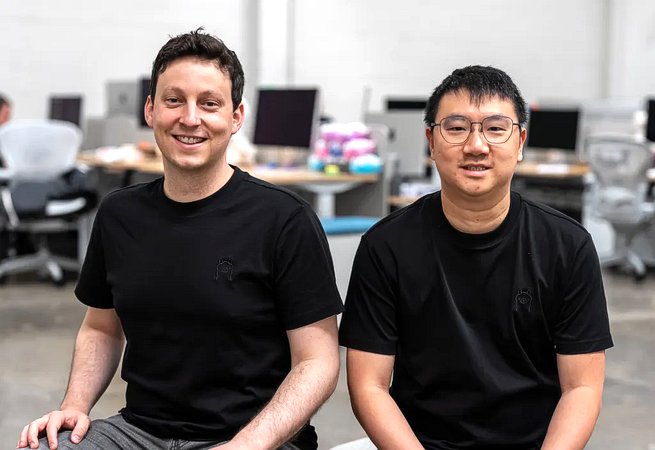
This latest funding follows a previous $15 million Series A led by Benchmark’s Peter Fenton. In total, the company has now raised $88 million. Ollama, which launched in 2023, enables developers to run open-weight AI models on their personal computers, getting them operational within minutes. It has earned widespread praise from developers across countless training platforms, videos, blogs, and social media posts. The project has accumulated 176,000 stars and nearly 17,000 forks on GitHub. Developers can also use Ollama to discover models and access larger, more complex ones hosted on its neocloud through several subscription tiers, ranging from free to $100 per month. Additionally, it tracks usage based on GPU time rather than token limits.
If the mission to help developers build more easily on their PCs sounds familiar, it should. Morgan and his co-founder Michael Chiang previously helped create Docker Desktop. They joined Docker after it acquired their earlier startup, Kitematic. Docker produces containers that simplify moving cloud applications between different environments, abstracting away complex hardware configuration issues. In essence, Ollama has done for AI what Docker and Docker Desktop did for cloud computing.
“Open models started coming out in 2023 but they were really hard to use,” Morgan explained. At the time, these models were designed for researchers, not programmers. “As a result, it was really hard to get them up and running.” Three years after its launch, Ollama is now “used by over 8.9 million developers every month, sitting in 85% of the Fortune 500 and growing like crazy,” he said, all with just 14 employees. That career experience attracted Benchmark’s Peter Fenton to lead its earlier funding round and join the board. “What Jeff and Michael built with Docker is being used by 10 million-plus developers every day.”
Morgan and Fenton declined to discuss the startup’s revenues or new valuation. However, Morgan noted that the proving point for Ollama as a business occurred around January, when OpenClaw gained popularity. That’s when larger open models “suddenly became able to perform these agentic tasks, like coding. Obviously, we saw the explosion of assistants like OpenClaw, and this idea that open models can get real work done.”
Since then, the industry has buzzed with the notion that paying users—particularly deep-pocketed enterprises and fast-growing AI application-layer startups—will increasingly turn to more affordable open models, reserving closed models like Anthropic for more occasional use. “I still think that this is the part that most of the debate gets wrong. It’s not an either/or,” Fenton said regarding open versus closed AI models. He contends there will be ample business for both. However, every company with high inference expenses—the costs of using models—has a “vital existential project” pushing them to move “to open-weight models,” he added.
There is plenty of evidence that such startups and enterprises are already turning to open models for their daily needs, which bodes well for Ollama’s cloud business. But even more intriguingly, Ollama exemplifies how AI is spawning a new wave of open-source projects that evolve into companies pursued by venture capitalists. Examples include open-source inference providers like Inferact (maker of vLLM) and RadixArk (maker of SGLang), as well as OpenClaw and its alternatives like NanoClaw. There are even tiny startups building their own open models from scratch, such as Arcee.
To be sure, not every Ollama enthusiast has been pleased with the company’s pursuit of profitability. About a year ago, several blog and social media posts complained that its cloud business was diverting attention from the beloved free project, citing Ollama as an example of the so-called “Enshittification” of developer tools. However, Morgan views its cloud service as an evolution of its open-source mission to help programmers find and easily use models. Those state-of-the-art, large open models are often “too big to run on your own computer. So we said, ‘Hey, let’s help find the compute for that,’” he explained. Board member Fenton added, “Nothing has changed for the core product that’s free on the desktop. There’s zero change to the premise that this is the place you can discover and run local models.”
RELATED ARTICLES

Comments
Please log in to leave a comment.

No comments yet. Be the first to comment!