Shopify Credits AI Search for Q2 Earnings Beat as AI Complements, Not Replaces, E-Commerce Discovery
By admin | Aug 05, 2026 | 3 min read
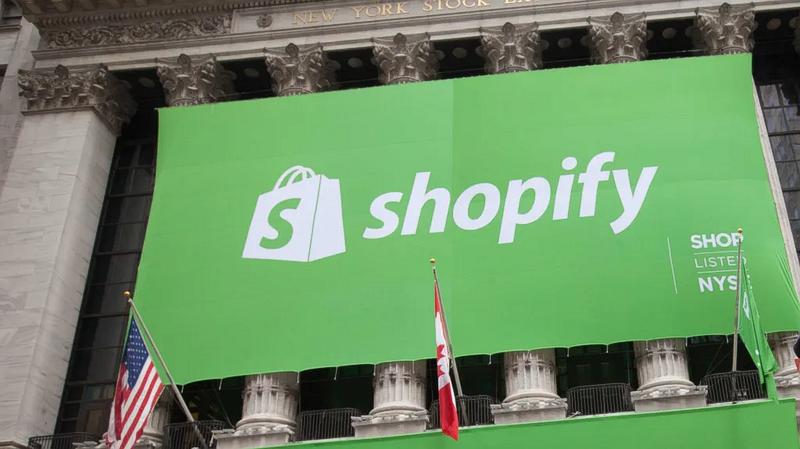
E-commerce software company Shopify appears to be reaping significant rewards from people using artificial intelligence for product searches. During the company’s second-quarter earnings call, Shopify President Harley Finkelstein noted that AI has evolved into a “complement to search, rather than a substitute for it,” with particularly strong benefits for the long tail of e-commerce—especially the smaller merchants who form the bulk of its customer base. In fact, the company partially attributed its earnings beat and surging revenue to AI-driven search.
This marks a sharp contrast to how AI is reshaping online publishing, where AI-generated summaries have caused a noticeable decline in click-through rates, reducing traffic and, in turn, cutting into advertising revenue. Shopify, however, sees AI as a clear advantage. The company reported that AI-driven traffic and orders to Shopify stores tripled year-over-year in the second quarter. Importantly, this growth didn’t come at the expense of traditional search. “In fact, search remains one of our largest sources of buyer traffic to our merchants, and it’s still growing,” Finkelstein told analysts. “Traditional search sessions are up 1.3x over the past two years, holding roughly a third of all storefront sessions.”
The platform delivered robust quarterly results, with revenue climbing 36% to $3.6 billion compared to the same period last year, beating Wall Street’s projection of $3.4 billion. Gross operating profit rose 31% to $1.71 billion, also exceeding analysts’ expectations of $1.63 billion. Finkelstein elaborated on why AI search is proving so effective for the business. “While search engines rank by popularity against a handful of keywords, AI agents make multiple calls into Shopify’s catalog, working with richer structured data to match products with the buyer’s specific intent, rather than just keywords,” he explained.
He illustrated the point with a concrete example: “When a buyer asks an AI assistant for the best car seat that fits three across a sedan, traditional search focuses on the keyword ‘car seat.’ An agent, however, understands the actual need, the dimensions, the vehicle type, and the fact that they need three. It searches across all of those constraints at once to find the product that actually works, not just the one that ranks highest.” In essence, AI’s ability to evaluate multiple parameters simultaneously is leading to higher conversion rates for merchants.
Finkelstein also highlighted how AI is streamlining the shopping journey. “Buyers’ shopping journeys are being compressed as half of all AI-referred sessions are landing directly on a product description page. That is 2.5 times more than what we see with traditional search,” he added. Additionally, the company noted that 75% of AI-attributed purchases in Q2 occurred outside the top 100 categories—what Shopify refers to as its “sweet spot.”
Looking ahead, Shopify suggested it is well-positioned to benefit from AI playing a larger role in transactions, thanks to its trusted checkout experience. The company also emphasized its active collaboration with AI tools and agents, having built connectors to platforms like Claude, ChatGPT, Perplexity, Manus, Replit, and Vercel, as well as vibe-coding platforms such as Lovable. This flexibility allows merchants to build on Shopify in whatever way they choose.
RELATED ARTICLES



Comments
Please log in to leave a comment.

No comments yet. Be the first to comment!