AI Data Centers Face Growing Backlash as Americans Debate Environmental and Energy Concerns
By admin | Sep 15, 2026 | 9 min read
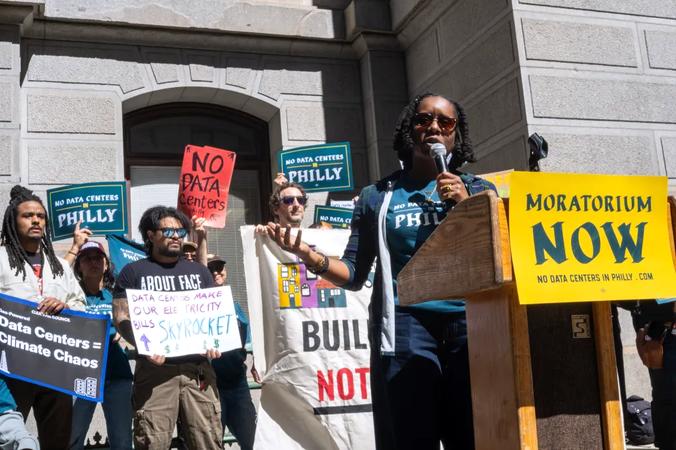
Across the nation, a growing debate is unfolding over what it would mean for new AI data centers to be constructed in local communities. While data center companies and their clients promise job creation and economic benefits, their arguments have failed to convince a majority of Americans, who oppose such construction in their areas—largely due to environmental and energy-related worries.
For activist Shawmar Pitts, these concerns are deeply personal. As a lifelong resident of the Grays Ferry neighborhood in Southwest Philadelphia, Pitts grew up beside what was once the largest oil refinery on the East Coast—a facility that ceased operations following an explosion in 2019. Many of his friends and relatives endured chronic health issues, but he didn't grasp the possible cause until 2018, when he encountered the environmental justice organization Philly Thrive, which was tabling in his neighborhood about a proposed expansion of the oil refinery. "From that point, I was all the way in."

Pitts, now the managing co-director of Philly Thrive, is one of the leaders pushing for a data center moratorium in Philadelphia. Although no formal construction proposals have been submitted yet, city officials have pinpointed two potential locations: one in Northeast Philadelphia and another in Pitts' own Grays Ferry neighborhood.
Opposition to data centers among local residents is not confined to Philadelphia. Across the United States, people have resisted new data center construction, especially in cities and towns with limited resources. But the resistance has been especially rapid in communities where the legacy of large-scale industry is still palpable. "We don't want data centers," said Sonya Sanders, board president of Philly Thrive, at a rally on Monday outside Philadelphia's City Hall. "We don't want the pollution, we don't want the noise, and we know they're not going to bring us more jobs."
Sanders' husband, also a Grays Ferry resident, died of a rare bone cancer in 2020. She said he neither smoked nor drank, and she attributes his illness to emissions from the refinery. "In my eyes, they killed him," she said at the rally. "The pollution killed him. I believe he would be here today if he wasn't silently murdered, because it was the pursuit of profit that killed him."

A Philadelphia data center might not have the same severe environmental impact as the now-closed Philadelphia Energy Solutions refinery, which processed up to 335,000 barrels of crude oil per day. Yet the global race to lead the AI industry has grown so intense that by 2035, BloombergNEF forecasts U.S. data centers will consume more natural gas than Germany and Japan combined—nearly double the firm's estimate from just nine months ago. Natural gas burns much cleaner than other fossil fuels like oil, but it is far from harmless. Burning one cubic foot of natural gas releases the equivalent of 60 grams of carbon dioxide, and the added demand from data centers is expected to produce an extra 1 million metric tons of greenhouse gas pollution daily—roughly 12% of all current U.S. greenhouse gas emissions. In 2021, Harvard University researchers found that fossil fuel air pollution is responsible for one in five deaths globally, a staggering figure that is likely to rise in the age of AI.
"A typical data center planned in Pennsylvania has hundreds of diesel engines that spew air pollution, and even if they're supposedly reserved for emergencies, the government has already said that the data center should use those rather than drawing from an overstressed electrical grid during some heat waves," said Annie Fox, an attorney with the Clean Air Council, at the rally. "We can expect that to get more frequent… Fossil fuel-hungry data centers will worsen climate change, making those heatwaves more frequent and severe."

Concerned citizens nationwide do appear to be making their voices heard by officials. In New York, Governor Kathy Hochul signed an executive order that temporarily blocks the state from approving new permits for large projects. "Progress shouldn't arrive with a higher utility bill, deleted water supply, or noise pollution," Hochul said at a press conference. "These data centers can only be built, should only be built in places that want them."
Data center moratoriums have also been enacted in several U.S. cities, including Denver, Indianapolis, Asheville, Charlotte, and Reno. These moratoriums typically aim to give city officials time to gather more information about the potential impacts of data center construction. "I'm worried about surveillance and the fact that they're going to have access to information they have no business knowing, and I'm concerned that they're going to be using water and electricity that takes away from the people and the neighborhoods who need it."
More than 100 people attended the kick-off rally for the No Data Centers in Philly campaign on Monday, chanting loudly in hopes that city council members would hear them from inside their City Hall offices. "I just think that our community standing up and fighting back is tremendous," Pitts said. "It takes a lot of effort and a lot of people."

RELATED ARTICLES



Comments
Please log in to leave a comment.

No comments yet. Be the first to comment!