Former Apple Executive Reveals Facebook's Content Moderation Crisis and Internal Failures
By admin | Apr 03, 2026 | 4 min read
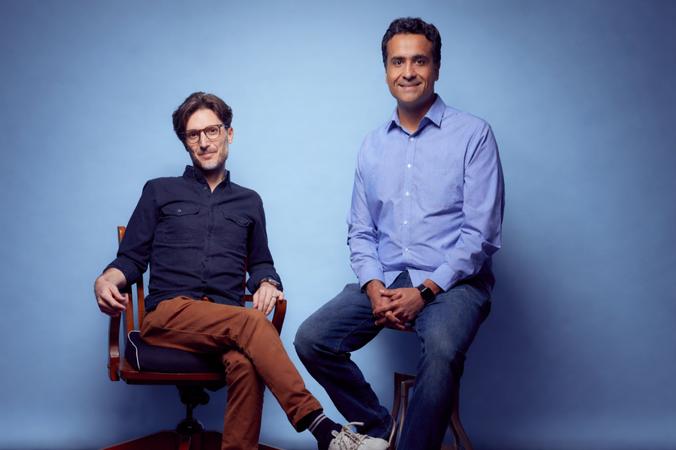
After leaving Apple in 2019 to oversee business integrity at Facebook, Brett Levenson encountered a platform deeply entangled in the aftermath of the Cambridge Analytica scandal. Initially, he believed advanced technology alone could resolve Facebook's content moderation issues. He soon discovered the challenge was more fundamental. Human moderators were required to learn a 40-page policy manual that had been automatically translated into their native languages. They then had roughly 30 seconds per flagged item to determine not only if it broke the rules, but also the appropriate action—such as blocking the content, banning the user, or limiting its reach. Levenson stated these rapid decisions were only "slightly better than 50% accurate." This slow, reactive method is untenable against agile and well-resourced adversarial groups. The proliferation of AI chatbots has intensified these difficulties, with moderation failures leading to notable cases, including chatbots offering self-harm advice to teenagers or AI-generated images bypassing safety protocols.
EMBED_PLACEHOLDER_0
This frustration inspired the concept of "policy as code"—transforming static policy documents into dynamic, enforceable logic that is directly linked to moderation actions. The funding round was co-led by Amplify Partners and StepStone Group. Moonbounce collaborates with businesses to add a protective layer wherever content is created, be it by users or artificial intelligence. The company has developed its own large language model to analyze a client's policy documents, assess content in real-time, deliver a response within 300 milliseconds, and execute an action. Based on client needs, this might involve Moonbounce's system throttling distribution for later human review, or instantly blocking high-risk material.
Currently, Moonbounce focuses on three primary sectors: platforms handling user-generated content, such as dating apps; AI firms developing characters or companions; and AI image generators. Levenson noted the platform is facilitating more than 40 million daily reviews and serving over 100 million daily active users. Clients include AI companion startup Channel AI, image and video generation company Civitai, and character roleplay platforms Dippy AI and Moescape.
"Safety has never been a built-in product feature because it's traditionally been a reactive process," Levenson explained. "Our customers are now discovering innovative ways to use our technology to turn safety into a competitive advantage and a core part of their product narrative."
EMBED_PLACEHOLDER_1
The head of trust and safety at Tinder recently described how the dating service uses similar LLM-driven tools to achieve a tenfold increase in detection accuracy. "Content moderation has always plagued major online platforms, but with LLMs now central to every application, this challenge is more daunting than ever," said Lenny Pruss, General Partner at Amplify Partners. "We invested in Moonbounce because we foresee a future where objective, real-time safeguards form the essential foundation for every AI-powered application."
AI companies are under growing legal and reputational pressure following incidents where chatbots allegedly encouraged teenagers and vulnerable users toward suicide, and image generators like xAI's Grok were used to produce non-consensual explicit imagery. Internal safety measures are clearly failing, making this a critical liability issue. Levenson observed that AI firms are increasingly seeking external expertise to strengthen their safety infrastructure. "As a third party between the user and the chatbot, our system isn't overwhelmed by conversational context like the chat model is," he said. "The chatbot may need to recall tens of thousands of prior tokens... We are focused exclusively on enforcing rules in real-time."
Levenson operates the 12-person company with former Apple colleague Ash Bhardwaj, who previously constructed large-scale cloud and AI infrastructure for Apple's core products. Their upcoming priority is a feature termed "iterative steering," created in response to tragedies like the 2024 suicide of a Florida teenager who became fixated on a Character AI chatbot. Instead of issuing a blunt refusal when harmful subjects emerge, the system would intervene in the dialogue and redirect it, altering prompts instantly to guide the chatbot toward a more constructive and supportive reply.
"We aim to expand our action toolkit with the ability to steer the chatbot in a positive direction," Levenson said. "This means taking the user's prompt and modifying it to compel the chatbot to be not just an empathetic listener, but a genuinely helpful one in those critical moments."
When questioned if his long-term plan involved an acquisition by a firm like Meta—which would bring his content moderation work full circle—Levenson acknowledged Moonbounce would integrate well into his former employer's systems, and he is mindful of his fiduciary responsibilities as CEO. "My investors might disapprove of me saying this, but I would dislike seeing a company acquire us only to limit access to the technology," he remarked. "As in, 'This is ours now, and no one else can use it.'"
RELATED ARTICLES

Comments
Please log in to leave a comment.

No comments yet. Be the first to comment!