US Defense Tech Company Deploys Over 100 Autonomous ATVs in Ukraine Combat Zones in Largest Military AI Ground Vehicle Operation
By admin | Jul 07, 2026 | 4 min read
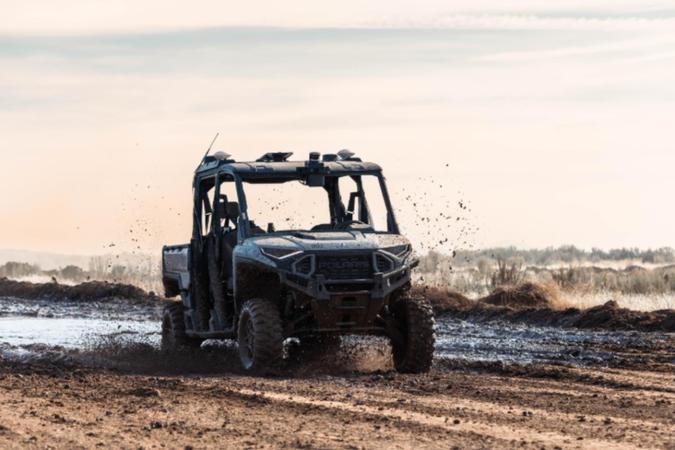
Forterra, a U.S. company specializing in autonomous vehicles, announced today that over 100 of its self-driving ATVs have been operating in conflict zones in Ukraine for the past nine months. The company believes this marks the largest deployment of autonomous ground vehicles in combat by any American defense tech firm. Funded by U.S. defense dollars, this mission is part of a broader initiative to modernize the U.S. military by supporting Ukraine’s resistance against Russian forces. While aerial drones have captured much of the spotlight in the conflict, the threats they create—extensive no-go zones where surveillance can result in deadly strikes—have pushed Ukrainian strategists to also pursue ground-based autonomy. “There’s nowhere to hide,” explained Sergeant Major Corey Wilkens, who leads a U.S. Army program developing autonomous vehicles and tactics. “You become very, very vulnerable to attack by [first-person view drones], other drones dropping munitions, artillery, mortar, and the full range of threats they have.”
Forterra’s Lancer vehicles, built on Polaris ATVs and outfitted with custom sensors and computing systems, run on gas and can haul up to 750 kilograms of cargo, making them versatile and practical. “The bottom line is that this UGV for logistics and just maintaining our defense is the most important UGV in Ukraine,” one soldier said. “It’s fucking fantastic, and we are dying to get more.” However, initial reactions were less enthusiastic. The Ukrainian Armed Forces have had mixed experiences with Western contractors introducing new technology to the battlefield, and Forterra’s offerings initially seemed tailored to the high-end demands of the U.S. Army. Adapting the vehicle for the situation—especially by adding a Starlink satellite internet antenna—transformed it into a major asset. Since arriving in Ukraine last October, the vehicles have traveled over 2,500 miles across more than 1,100 missions, carrying 777,440 pounds of cargo and completing 52 casualty evacuations. Some have been lost in combat, particularly when stuck in deep mud or other terrain where Russian forces could target them at will.

Forterra has gained valuable insights from this experience—covering electronic warfare, remote software updates, navigating challenging conditions, and preventing breakdowns. The company, which has raised over $500 million in venture funding from investors like XYZ Venture Capital and Moore Strategic Partners, is now better positioned to compete for major national security contracts. They’ve also recognized the limitations of autonomy: for now, Ukrainian soldiers primarily teleoperate the vehicles in combat zones, partly because they’re too valuable to risk and partly because autonomous systems aren’t yet ready for the realities of war. For instance, while the vehicles can navigate independently across various terrains, they can’t yet identify unexpected enemy forces and respond appropriately. “We actually need to be able to respond to the enemy threats, live, while it’s in front of the enemy, which the autonomy doesn’t know how to do yet,” the Ukrainian soldier explained. Forterra, which began working on autonomous vehicles 20 years ago, is now exploring how to blend the algorithms behind self-driving cars with newer generative AI software that enables machines to react to their surroundings in a more generalized way. As with other autonomous systems, a key challenge is gathering the right data. “You need to be able to turn the dials and some things more of a classical robotics approach, and then leverage AI where you need to.”
Competitors in this field are tackling similar issues, such as Scout AI, which raised $100 million earlier this year to train foundation models and develop a lineup of autonomous military platforms, including UGVs. Other startups like Field AI and Overland AI are testing UGVs with the U.S. military. Despite the current limitations on UGVs, American military experts believe it’s time to invest in these tools. “Ground autonomy is achievable now and we’ve seen it,” Wilkens said. Scott Philips, Forterra’s chief innovation officer, visited a Ukrainian unit’s operations center to observe the vehicles in action firsthand, earning respect from the unit for venturing into areas within range of Russian attacks. “That’s the kind of ground truth you can’t get from a slide deck because it shows you precisely where better tooling could take pressure off the people doing this work in real time.” One challenge raised by the Ukrainians: Make it cheaper. Forterra’s Lancers aren’t expensive for their class, thanks to using Polaris’s commercial supply chain for the vehicle itself, but they’re still too valuable to deploy as freely as UAVs can be.
RELATED ARTICLES

Comments
Please log in to leave a comment.

No comments yet. Be the first to comment!