Savi Security raises $7M to launch AI-powered scam protection app
By admin | Jul 07, 2026 | 4 min read
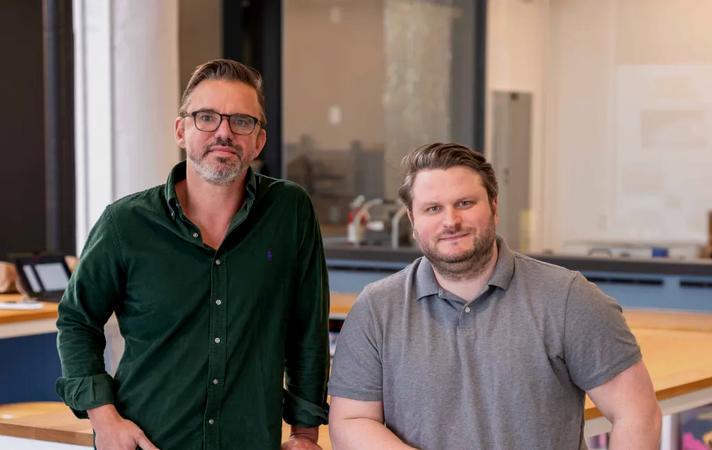
Brothers Patrick and Ryan Coughlin have each built impressive careers in technology—Patrick in national cyber defense and at companies like Splunk and Cisco, and Ryan working on consumer products at Apple and Spotify. Now, they’ve launched a new kind of security startup called Savi Security. The company aims to protect everyday people from the latest wave of highly convincing AI-generated scams, whether they come through text messages, emails, or phone calls. Savi has just raised $7 million in seed funding, led by Acrew Capital with participation from Magnify Ventures, TTCER, and Resolute Ventures. The app launches Tuesday for both iPhone and Android.
The inspiration for the company came from a terrifying incident involving the founders’ mother. About two years ago, Patrick Coughlin’s mom called him in distress, saying she had just received a phone call from a man claiming to have kidnapped Coughlin’s sister. At the time, Patrick was senior vice president of security products at Cisco, having landed there after Splunk acquired his cloud security startup TruSTAR for a reported $82 million in May 2021. (Cisco later bought Splunk in 2024.)
Her mobile phone rang with the caller ID displaying her daughter’s name. During that call, “she thinks she hears my sister’s voice saying, ‘Mom, they’ve got me.’ There’s a blood-curdling scream, and then my sister says, ‘You’ve got to do what they tell you.’ And then a man comes on the phone and says, ‘If you don’t pay us $1,200 right now, we’re going to kill your daughter in the parking lot of the local Walmart,’” Coughlin recounted. The scammer had accurately spoofed his sister’s phone number, her voice, and even mentioned the Walmart she frequented. Fortunately, his mother kept her composure, called her daughter, and discovered she was perfectly fine. The kidnapping was an AI-generated scam.
Coughlin, like his mother, was shaken. “What I was thinking, after calming my mom down, is: What has fundamentally changed in the underlying cybercriminal economy that we are now able to leverage the same kind of sophistication I had seen pointed at government agencies, and then later at Fortune 500 companies, and now we’re deploying that sophistication at the consumer?” he said.
The answer, of course, lies in cheap and powerful large language models and other generative AI tools. Before AI, pursuing such scams against consumers wasn’t financially worthwhile. It required in-depth research on the target, technology to spoof voices, and other costly resources. These attacks were primarily aimed only at deep pockets, like enterprises or governments, and the defenses against them were similarly focused. “There’s something happening right now to consumers with AI in the hands of cyber criminals,” Coughlin said. The costs to perpetrate such swindles have become negligible, and research material is easily available. “You can clone a voice off three seconds of audio, off a publicly available social media post. So we’ve all got these traces of stuff out there in the ether—like where we’re talking or narrating; commenting on a kid’s football game while videotaping it, and putting it on Facebook.”
The Federal Trade Commission reported last month that people reporting online crimes collectively lost $3.5 billion to imposter scams in 2025, triple the amount in 2020. While the majority of people reporting such scams are older Americans, some research indicates Gen Z is also highly susceptible. Research from 2025 by Malwarebytes, a maker of antivirus and anti-malware tools, found that Gen Z was targeted more often with text scams than other generations and fell for them about 25% of the time.
The Coughlin brothers’ idea was to develop a real-time intervention tool. They tested their concept and the AI scam detection model they were building by launching a free website called Scam Wise. It’s anonymous and requires no registration—users simply upload any suspicious texts, photos, or emails, and Scam Wise determines if they’re likely fraudulent. “We launched that about four months ago. We’ve had 50,000 submissions, and it grows now every week by about 10,000 submissions or more,” Coughlin said. Scam Wise provided a source of real-world data to help train Savi’s scam-detection AI model. The startup currently uses Google’s Gemini primarily but has built its software on an AI gateway, allowing it to tap into other AI models as needed, such as voice detection-specific options.
On Tuesday, Savi launched a paid product—an iOS and Android app for consumers—that can screen texts, voicemails, and incoming calls for scams. While such features are available in many other products (like Malwarebytes), Savi’s most impressive feature is live call monitoring. During a suspicious phone conversation, a user can opt to add the app’s live agent as a listener. Savi listens for behavioral tells that can identify if the situation is a scam while the call is still in progress.
Savi’s pricing is also somewhat unusual. It charges $8 per month, discounted to $63 per year, to cover an entire family, with no limit on the number of users. So one plan can cover a person’s kids, spouse, parents, and that uncle who always seems to need tech support—or anyone else the primary account holder wants to add and provide administrative support to.
AI has changed the conditions for “how accessible being a fraudster is,” Coughlin said. “We’re creating fraudsters because we’re bringing down the barrier of deceiving people. So not only do we have the organized criminals and the syndicates behind this, but everyday people are sort of being tempted into playing fraud.”
Savi Security’s answer is like a new generation of antivirus-like software: one that uses AI in real time, just like the bad guys do.
RELATED ARTICLES

Comments
Please log in to leave a comment.

No comments yet. Be the first to comment!