Uber Expands AWS Deal, Adopts Amazon's Graviton and AI Chips
By admin | Apr 07, 2026 | 3 min read
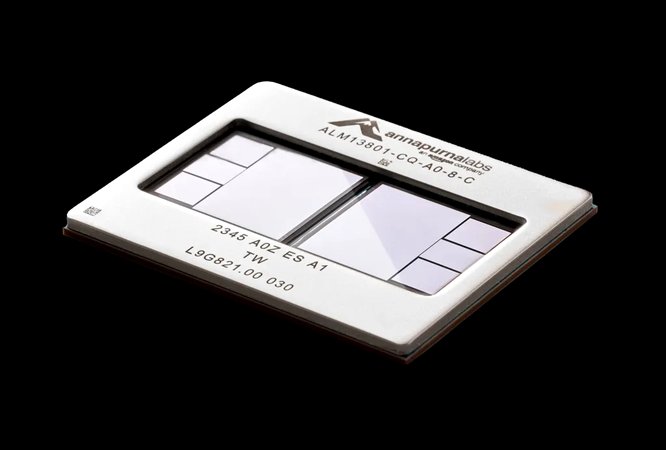
On Tuesday, Amazon revealed that Uber is broadening its agreement to use AWS cloud services, shifting more of its ride-sharing operations to run on Amazon’s custom chips. Uber plans to significantly increase its adoption of AWS’s Graviton—a low-power, ARM-based server CPU—and will begin a new pilot program testing Trainium3, AWS’s AI accelerator chip positioned as an alternative to Nvidia.
This move is less about posing a direct, long-term challenge to Nvidia and more a clear demonstration by Amazon of its competitive edge over other cloud providers like Google and Oracle. Historically, Uber operated its own data centers, but in 2023, the company entered into substantial, multi-year cloud agreements with both Oracle and Google. The stated goal was to migrate the majority of its IT infrastructure away from its own facilities and onto those two cloud platforms.
EMBED_PLACEHOLDER_0
As recently as December, Uber reaffirmed this objective, noting in a blog post: “In February 2023, Uber began transitioning from on-premise data centers to the cloud using OCI and Google Cloud Platform, taking on the dual challenge of shifting massive workloads and introducing Arm-powered compute instances into a previously x86-dominated environment.”
In that same post, Uber highlighted its use of ARM chips from Ampere within Oracle’s cloud. This detail adds an interesting layer to the story. The history of Ampere itself offers a case study in the interconnected nature of Silicon Valley. The company was founded by former Intel executive Renee James after she was passed over for the CEO role at the chipmaker. Leveraging her influence—including her position as an investor at private equity firm Carlyle and her seat on Oracle’s board—she secured the funding to launch the venture.
Oracle initially owned approximately one-third of Ampere, an investment that required James to relinquish her status as an independent director on Oracle’s board. (Notably, James was a key board member who supported Oracle’s $9.3 billion acquisition of NetSuite in 2016—a company where Oracle co-founder Larry Ellison was a major shareholder. That deal later prompted an unsuccessful shareholder lawsuit alleging Oracle had overpaid.)
In December, Ampere was acquired by its major competitor SoftBank, with Oracle selling its stake for a pre-tax gain of $2.7 billion. James departed Oracle’s board at the end of 2024 and is no longer with Ampere. Currently, Oracle is aggressively raising capital to construct data centers for clients like OpenAI and its reported “Stargate” project. Ellison has stated that Oracle sold its Ampere stake because it no longer views in-house chip design as a competitive advantage for its data centers, preferring instead to purchase chips through large-scale agreements with suppliers like Nvidia.
It is worth noting that Oracle, SoftBank, and Nvidia are also enmeshed in a network of circular deals intended to fund OpenAI’s extensive data center expansion. Now, however, AWS is announcing it has secured an expanded contract from one of Oracle’s marquee customers, Uber, precisely because of its in-house designed chips. Uber now joins other major tech firms like Anthropic, OpenAI, and Apple that have signed or expanded agreements with AWS due to these specialized AI chips.
In December, Amazon CEO Andy Jassy stated that Trainium had already grown into a multibillion-dollar business.
RELATED ARTICLES



Comments
Please log in to leave a comment.

No comments yet. Be the first to comment!