AI Startups Adopt Novel Valuation Tactics to Manufacture Market Dominance
By admin | Mar 04, 2026 | 3 min read
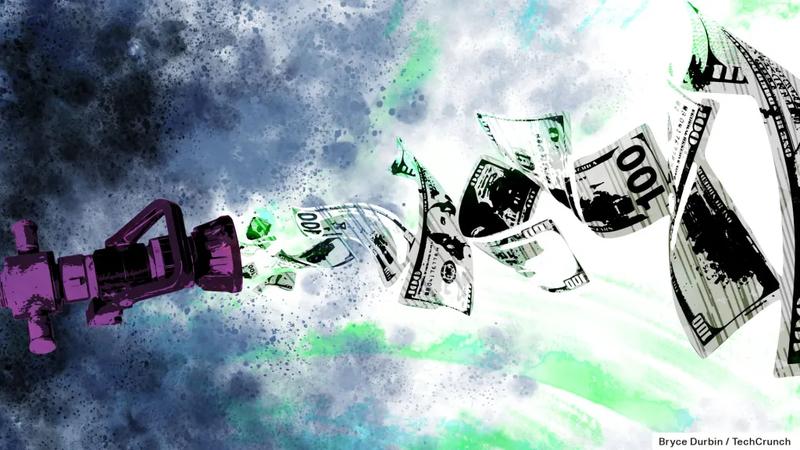
As the race between AI startups intensifies, founders and venture capitalists are adopting innovative valuation methods to project an image of market leadership. In the past, top companies often secured several funding rounds in rapid succession, each at a higher valuation. However, because continuous fundraising can pull founders away from product development, leading VCs have created a new pricing model that merges two potential funding rounds into a single event.
One recent example is the Series A round for Aaru, a synthetic-customer research startup. Redpoint led the investment, committing a substantial portion of its funds at a $450 million valuation, as reported by The Wall Street Journal. Redpoint then invested a smaller amount at a $1 billion valuation, with other venture capitalists joining at that same $1 billion price point, according to our reporting. This structure enables promising startups such as Aaru to claim unicorn status—valued over $1 billion—even though a large share of equity was purchased at a lower valuation.
“It is a sign that the market is incredibly competitive for venture capital firms to win deals,” noted Jason Shuman, a general partner at Primary Ventures. “If the headline number is huge, it’s also an incredible strategy to scare away other VCs from backing the number two and number three players.”
The eye-catching “headline” valuation fosters an impression of a market leader, even when the lead investor’s average price is much lower. Wesley Chan, co-founder and managing partner at FPV Ventures, sees this approach as indicative of bubble-like tendencies. “You can’t sell the same product at two different prices. Only airlines can get away with this,” he remarked.
Typically, founders provide a discount to elite VCs because their backing sends a strong market signal, aiding in talent recruitment and future fundraising. However, since these rounds are often oversubscribed, startups have devised a way to manage excess interest: instead of rejecting keen investors, they allow immediate participation—but at a much higher price. Investors accept this premium because it is their only route onto the cap table of a highly sought-after company.
Another startup reported to have offered preferential terms to its lead investor is Serval, an AI-driven IT help desk company. While Sequoia’s lowest entry point reflected a $400 million valuation, Serval announced in December that its $75 million Series B valued the business at $1 billion.
Although a lofty headline valuation can assist in hiring talent and drawing corporate clients who may perceive the company as a market leader, the tactic carries risks. Even though the actual blended valuation for these startups falls below $1 billion, they are generally expected to raise their next round above the headline price; failing to do so would result in a punitive down round, Shuman explained.
These companies are in high demand today, but they could encounter unforeseen obstacles that make it difficult to support their elevated valuations. In a down round, employees and founders see their ownership stakes diluted, and the confidence of partners, customers, future investors, and potential hires can be undermined.
Jack Selby, managing director at Thiel Capital and founder of Copper Sky Capital, cautions founders that pursuing extreme valuations is risky, citing the sharp market correction in 2022 as a warning. “If you put yourself on this high-wire act, it’s very easy to fall off,” he said.
RELATED ARTICLES

Comments
Please log in to leave a comment.

No comments yet. Be the first to comment!