AMI Labs CEO shuns "AGI" and "superintelligence" labels as AI buzzwords shift
By admin | Jul 16, 2026 | 4 min read
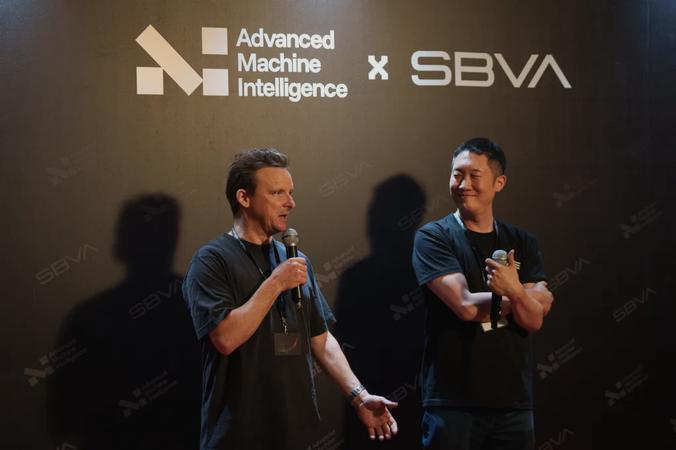
As the broader AI industry rushes to brand its achievements as "AGI" or "superintelligence," Alexandre LeBrun, CEO of Yann LeCun’s world model startup AMI Labs, deliberately sidesteps those labels. "We never used the word AGI. And I just noticed that nobody is using it anymore; they switched to superintelligence," he remarked. "Next time we’ll switch to something else." He remains unconvinced by the new terminology as well. "There’s no good definition. What is superintelligence? I don’t know. It’s not a very useful word."
This pointed stance comes from a founder positioned at the heart of AI's latest frontier. AMI Labs has yet to launch a product, but it is already attracting interest from robotics, manufacturing, and electronics companies. LeBrun explained that a world model—which uses physics to predict and interact with the real world—must demonstrate its value beyond the laboratory. One area where world models are expected to make a significant impact is robotics. Currently, robots operate on fixed routines, "completely static," and AI remains "really dumb in the physical world," according to LeBrun. Even if AI could simply make robots "aware of the context," that would represent "a very big difference for the world." Such context-aware AI could have prevented, for instance, a robot performing dance and kung fu moves at a public event from approaching and kicking a child. "The hardware is very advanced; progress in hardware in the last few months is incredible, but there’s no brain."
A large language model (LLM) predicts the next word or text, while a world model predicts the next state. If you nudge a glass off a table, you instinctively know it will tip and spill; that intuition is what a world model aims to capture: predicting the next state of the world, LeBrun explained. He does not claim world models are superior to LLMs, which are "complementary, not replaceable" for AI systems that understand the physical world. Drawing a parallel to the human brain's distinct language and reasoning functions, he added that LLMs will remain the most efficient tools for processing language, while world models will provide context and real-world understanding. Almost every industry that "touches the real world" could eventually benefit from robotics based on world models, LeBrun argued, noting that physical environments remain where LLMs are weakest. A factory robot repeating the same motion works well enough today, he said. The challenge arises when "you take your robot outside into a more open environment, in your household, or in the street," where it must understand its surroundings and operate safely. "Robots are not safe right now," he stated. "There’s no solution for that today."
Healthcare offers a more personal example for LeBrun, whose previous company was Nabla, an AI health startup. He compared today's AI systems to a doctor trained only on textbooks without clinical residency. LLMs may be useful in medicine, he said, but they cover "only 1% of healthcare." The rest relies on real-world experience. However, a world model cannot be built inside a lab, LeBrun noted. To train on reality, AMI needs real environments and close partners. "We need access to the real world," and it's "easier for us to do that with partners." This is part of what draws him toward Asia, where robots, chips, and factories are located. LeBrun won't disclose a full Asia strategy yet. "It's too early," he said. But the pull toward South Korea comes down to two factors. First, Korea has advanced industries in robotics, semiconductors, and manufacturing—hardware-heavy sectors that the first wave of AI barely touched. The second attraction is speed. LeBrun pointed to Korea's national plan to invest heavily in AI and its history as an early adopter. "Korea was the fastest adopter of the internet 25 years ago," he said. It's this combination—a deep industrial base plus a willingness to embrace AI quickly—that he calls "unique," and the reason "we want to be here from day one." The government has done "a tremendous job" funding local sovereign LLM models, Lee said, and those already work "well enough" for general-purpose tasks, but he's pushing for Korea to continue investing in physical AI as well. He referenced Seoul's June plan to mobilize approximately $880 billion for chips, AI data centers, and physical AI, as one of three declared pillars. "They should coexist."
Korea's value to foreign firms, Lee argued, goes beyond hardware. Local developers are quick to adopt and adapt new tools, a pattern that has produced homegrown internet players like Naver and Kakao. Despite the star power and billion-dollar check, AMI has nothing to sell yet. The startup, co-founded by Turing Award winner Yann LeCun after he left Meta, raised $1.03 billion in March at a $3.5 billion pre-money valuation. There is no product yet, and LeBrun won't commit to a timeline. "We'll make a surprise when we're ready," he said.
RELATED ARTICLES



Comments
Please log in to leave a comment.

No comments yet. Be the first to comment!