Former Palantir Engineer Quits Over ICE Deportation Tech, Now Faces Political Attack Ads
By admin | Mar 04, 2026 | 4 min read
Loading the player…
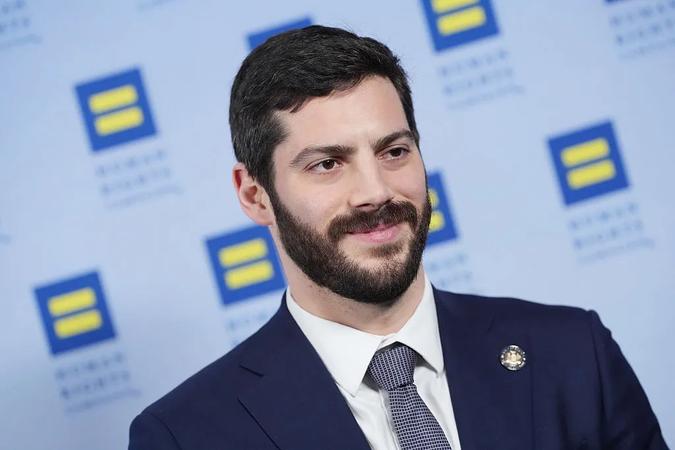
Recent political advertisements targeting New York assembly member Alex Bores highlight his past employment at Palantir, the AI firm known for providing technology to U.S. Immigration and Customs Enforcement for raids and deportations. The ads claim Bores earned hundreds of thousands of dollars developing tools that "powered their deportations."
However, there is more to the narrative. Bores is currently a candidate for New York’s 12th congressional district, facing opposition from outside groups funded by prominent tech billionaires. These advertisements are financed by a super PAC named Leading the Future, which receives support from Palantir co-founder Joe Lonsdale, OpenAI President Greg Brockman, venture capital firm Andreessen Horowitz, AI search startup Perplexity, and other influential Silicon Valley figures. The PAC has accumulated $125 million to oppose candidates in state elections who advocate for AI legislation and to support those favoring minimal regulation of AI.
Bores stated, "They have committed to spending at least $10 million against me…because they know I am their biggest threat in their quest for unbridled control over the American worker, over our kids’ minds, climate, and our utility bills." He added, "They’re targeting me to make an example of me."
According to Bores, his professional experience in technology, including roles at Palantir and various startups, is precisely why Leading the Future has singled him out. "I actually deeply understand the technology and I can’t be dismissed as ‘this person just doesn’t understand it,’" he remarked, noting that if elected, he would become only the second Democrat in Congress with a computer science degree.
Bores drew criticism from Silicon Valley after sponsoring the RAISE Act, an AI transparency bill enacted into law in December. This legislation mandates that large AI labs—specifically those generating over $500 million in revenue—maintain a publicly available safety plan, adhere to it, and report any catastrophic safety incidents. It represents a moderate regulatory approach, emphasizing disclosure and planning rather than stringent oversight.
Bores believes Leading the Future opposes any form of AI regulation, unless it is implemented at the federal level, as the PAC has indicated. Over the past year, states have been contending with industry interests to preserve their authority to regulate AI in the absence of federal standards. In December, President Trump issued an executive order directing federal agencies to challenge what he termed "onerous" state AI laws, including Bores’ RAISE Act.
Bores referenced his campaign’s proposed national AI governance framework, which covers eight issue areas and includes 43 policy recommendations. He argued that anyone genuinely committed to federal AI regulation should support his candidacy. He has also introduced legislation requiring companies to disclose the contents of their training data and to adopt metadata standards that would improve traceability of synthetic content.
Leading the Future is not the only Silicon Valley-backed PAC active in the midterms. Meta has invested $65 million into two super PACs—American Technology Excellence Project and Mobilizing Economic Transformation Across (Meta) California—to elect state-level candidates favorable to the AI and tech industry. Additionally, AI companies, industry groups, and top executives contributed at least $83 million in 2025 to federal campaigns and committees.
Bores commented, "This is not a ‘We want to have a piece of the conversation.’ This is: ‘We want to intimidate elected officials and browbeat anyone who doesn’t agree with us.’"
He further observed, "The average assembly race in New York raises maybe $100,000 total, maybe less. For one company (Meta) to be spending $65 million on state races, let alone everything they’re doing in Congress—I think it’s tough for people to understand how much that is above the norm."
In contrast, Bores has secured support from a separate Anthropic-backed PAC called Public First Action, which is spending $450,000 on his campaign. Public First Action also identifies as pro-AI but emphasizes transparency, safety, and public oversight.
Bores described Leading the Future as representing "an extremely small minority of voices" who view any regulation as a threat to AI progress and simply "want to let it rip." His supporters include tech employees from the very companies whose leadership opposes his campaign, reflecting a broader trend of grassroots organizing within tech firms concerning AI deployment and its beneficiaries.
At the other extreme, Bores noted, are a minority of individuals who "want to pretend AI never existed and put the genie back in the bottle and burn all the data centers." He believes most Americans occupy a middle ground—they utilize AI and recognize its potential but are apprehensive about its rapid advancement.
Bores concluded, "[They] wonder if the government is up to the task of ensuring we have a future that benefits the many instead of the few."
RELATED ARTICLES


Comments
Please log in to leave a comment.

No comments yet. Be the first to comment!