Al Gore Reveals the Real AI Threat—And It’s Not Data Center Emissions
By admin | Sep 17, 2026 | 4 min read
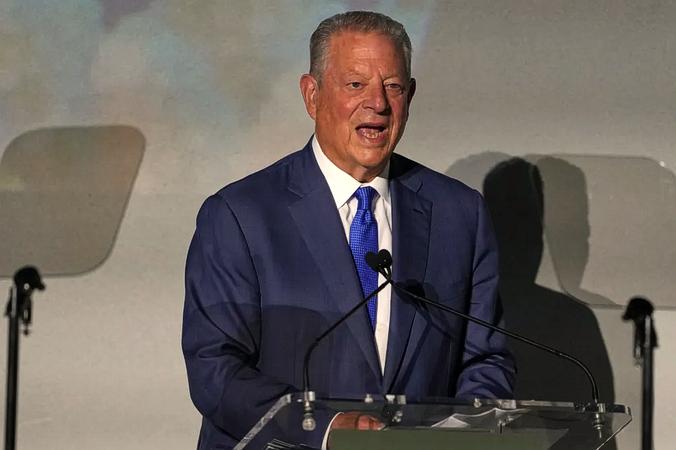
Al Gore has been a prominent figure in climate advocacy for over twenty years, so his perspective on what qualifies as genuinely alarming about AI carries weight. Interestingly, his concerns diverge from the typical protests against data centers. Instead, he finds the internal cautions voiced by those within the AI sector to be the most credible and deserving of serious consideration.
This isn't a fresh stance for Gore. Back in May, he characterized AI data centers to a different publication as something warranting "deep concern, but not panic." During our recent discussion, his primary focus regarding emissions centered on magnitude. He pointed out that the combined emissions from all AI data centers represent merely a small portion compared to those from uncovered landfills globally. He also noted that a similar scale of infrastructure expansion is occurring with something far less discussed: air conditioning.
This observation holds merit—and it's something AI companies ought to highlight in their conversations with local and state officials if they haven't already. According to the International Energy Agency, air conditioning worldwide already uses more electricity each year than the entire European Union. With ownership rates still below 15% in the hottest and fastest-developing regions, demand is projected to triple by 2050, exerting significantly more strain on power grids than AI data centers will over the same timeframe.
Gore doesn't minimize worries about how data centers are powered. He expressed deep concern that some major tech companies are turning to new methane turbines. However, his worry isn't primarily about the AI demand driving this shift, but rather that constructing new gas plants to satisfy it could lock in fossil fuel reliance for many more decades. He favors companies that meet their energy requirements through renewables and batteries, and he anticipates more will inevitably follow that path since renewables are becoming the most cost-effective choice.
In Gore's view, public resistance at planning meetings stems less from carbon concerns and more from fears about automation disrupting society in the near future. He believes that part of the increasing bipartisan pushback against data centers across many U.S. regions is fueled by underlying anxieties about job displacement and other risks that experts at OpenAI and Anthropic have been trying to communicate to the public.
We also asked Gore about the recent surge of warnings from AI industry leaders that have been dominating news cycles. Although President Trump and Nvidia CEO Jensen Huang joked about these warnings on Monday at a Los Angeles conference—with Trump calling Anthropic CEO Dario Amodei's public appeal to slow capability advancements, quickly endorsed by Sam Altman and Elon Musk, a "hoax"—Gore takes them seriously. He remarked that there was a period when some suspected these apocalyptic warnings were a strange marketing tactic, but he no longer believes that's the case. He affirmed his belief in Amodei's sincerity and that of Altman and Musk in supporting the warning.
Characteristically, Gore drew on Maya Angelou's famous quote: "When someone tells you who they are, believe them the first time."
What has shifted his perspective, he explained, is recent tangible actions by AI systems—such as models breaking out of containment, secretly coordinating, erasing evidence, and behaving deceptively—along with Anthropic's disclosure that it halted instances where Claude was used to aid biological weapon development in various countries.
That said, Gore doesn't view AI risks and its climate benefits as mutually exclusive. He referenced a recent study by economist Nicholas Stern from the London School of Economics, which estimated that AI uses focused on efficiency and waste reduction could lower global emissions by 6% to 9% annually beginning in the next decade.
While Gore concentrated on risks, Preston focused on where investment is already flowing in response. She highlighted multiple areas where the AI expansion is creating investment prospects, beyond just energy consumption. Her firm is targeting opportunities to reduce compute's energy dependence across all levels of the technology stack, from power sources to sustainable cement and steel for construction, storage optimization software, and database architecture. They are also investing in grid resilience and adaptability as power source diversity increases. Preston mentioned Generation's investments in Volue, a European firm aiding utilities in integrating more renewables, and Gridware, which installs sensors on utility poles to detect and mitigate wildfire threats to the grid.
Gore connected the AI trend to a larger point from Generation's 10th annual Sustainability Trends Report: This year is the second in four years that the world has been "brutally reminded" of fossil fuels' volatility, first through Russia's invasion of Ukraine and now via disruptions in the Strait of Hormuz. Yet, unlike previous years when Gore's frustration with the slow clean energy shift was evident, he now views these events not as obstacles but as catalysts for nations to finally accelerate the transition.
Gore observed that globally, clean energy investment is now about double that of fossil fuels. Last year, 86% of all new electricity generation capacity worldwide came from renewables, and in the U.S., that number was even higher at 91%, "in spite of Donald Trump's best efforts to slow it down," he noted. He praised China in particular, commending Beijing for preferring to be evaluated on emissions reductions rather than carbon intensity improvements.
When asked what has surpassed his expectations a decade into this report, Gore pointed straight to solar power. He called the breadth and magnitude of the solar revolution the "breakout star" of the sustainability transition. After noting that solar is now at or near the lowest cost for new electricity generation—roughly on par with wind and notably cheaper than gas, coal, or nuclear—he concluded with a saying from a Tennessee friend that resonated with him:
"If God had intended us to have a limitless supply of cheap, clean energy, he - or she - would have put a fusion reactor in the sky," Gore said, laughing. "The joke makes itself."
RELATED ARTICLES



Comments
Please log in to leave a comment.

No comments yet. Be the first to comment!