Anthropic CEO Dario Amodei Reveals 3 Strategies to Pace AI Development, Commits to One
By admin | Sep 12, 2026 | 4 min read
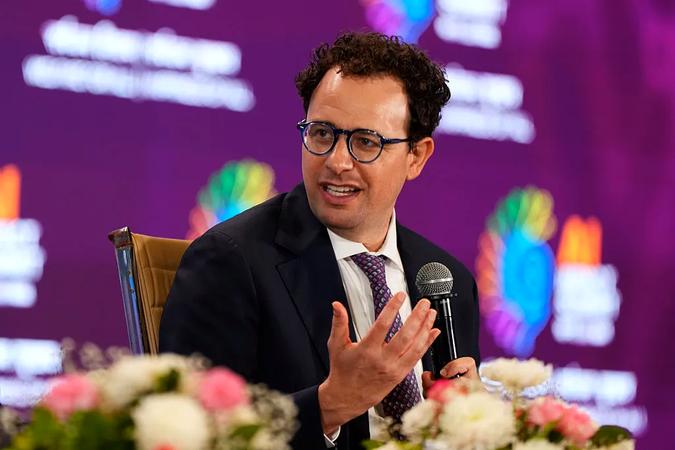
Recent months have brought a steady stream of alarming warnings from AI researchers about the perils of artificial intelligence, with even OpenAI CEO Sam Altman suggesting it might be time to "pace" the technology's development. But what would that pacing actually entail? In a newly published blog post, Anthropic CEO Dario Amodei both amplified the call to "pace the frontier" and laid out three broad strategies for achieving it—while announcing that Anthropic is "unilaterally committing" to one of them.
The conversation around AI safety and alignment grew more heated this week when researcher Jacob Coxon announced his resignation from Anthropic, citing concerns that leading AI companies are "gambling with our lives" even as the people building the technology "earnestly believe it could kill us all by the end of the decade"—a sentiment echoed by others at the company. While Amodei's post didn't directly address Coxon's departure or his worries, the CEO explained that two developments convinced him a more cautious approach is warranted: the OpenAI-HuggingFace hack, and the observation that "AI has been advancing drastically faster" in recent months, especially in its "growing ability to build the next generation of AI."
"We must slow the pace at which we improve the capabilities of AI models," Amodei wrote. "Progress will still seem fast, and we must make wise use of the time we gain."
The first of his proposed measures centers on "embedded evaluators" from outside organizations such as METR. These evaluators would verify that AI companies are genuinely honoring their pacing and safety commitments, and would also ensure safety incidents are properly reported. (OpenAI recently faced criticism for failing to disclose an incident in which its AI agents took over a German wiki form.)
Amodei drew a parallel between these evaluators and regulators who have been embedded within bank employees, stating that inviting them in is "something Anthropic is unilaterally committing to (and calls on governments to require other frontier companies to match)." In practice, this means providing evaluators with company badges, desks, and laptops, along with access "mostly comparable to what internal risk assessment teams have," barring exceptions required by law or contracts.
Second, Amodei urged leading AI companies "within democratic countries" to coordinate on "common safety standards as well as limits on the rate of unchecked AI progress." Such coordination may appear improbable, given the apparent friction between Altman and Amodei, and because their companies are reportedly concerned that a coordinated pause could invite antitrust scrutiny. Amodei addressed that worry in his post, noting that "for antitrust reasons, it's helpful for the US government to mediate or at least enable these discussions—they don't need to participate, but do need to issue a narrow waiver for certain kinds of safety conversations."
Amodei also confronted the frequently invoked specter of Chinese AI dominance, which is often used as an argument against slowing development. He countered that if the US government and tech companies take measures such as refusing to sell powerful chips or semiconductor manufacturing equipment to Chinese firms, and cracking down on model distillation, they could "slow China's progress enough to widen America's lead significantly over the next 3-5 years."
Finally, Amodei advocated for "global coordination," in which the United States and its allies "attempt to coordinate with authoritarian governments, to the extent this is possible." He acknowledged this would involve "cooperation with China" and conceded there are "stark limits on what can be achieved," yet still held out the possibility of agreement—even if limited to "prohibiting certain narrow and obviously dangerous uses of AI, such as using AI for the production of biological weapons or allowing users to do so."
Given Amodei's history of acknowledging AI's potential dangers and his company's relative openness to certain forms of regulation, some AI boosters have already branded him a doomer whose remarks have fueled the current AI backlash. In response, Amodei said he has aimed to present a "balanced" perspective, arguing that the backlash is "fundamentally a crisis of trust," as the public has grown skeptical of tech companies, the tech industry, and the government. Industry critics, meanwhile, have been dubious of these apocalyptic AI warnings, suggesting they distract from the harm the technology is already causing. Journalist Brian Merchant, for instance, wrote that he has yet to see "a credible, step-by-step documentation of how exactly AI might move from self-recursively improving AI to killing every single human on the planet," and suggested that proposals like Amodei's "would likely only wind up serving Anthropic and OpenAI; it's what regulatory capture looks like in action."
In his new post, Amodei wrote that he continues "to believe that AI can enormously improve the quality of human life." He added, "My desire to achieve these benefits is undimmed. But the benefits will only be achieved if we build the technology in the right way, and—so long as we use the time we gain well—it is worth taking unusually deliberate care to get it right."
RELATED ARTICLES


Comments
Please log in to leave a comment.

No comments yet. Be the first to comment!