Nvidia's Blackwell Chips Reportedly Reached Chinese AI Labs Despite US Export Ban, New Research Reveals
By admin | Nov 13, 2026 | 4 min read
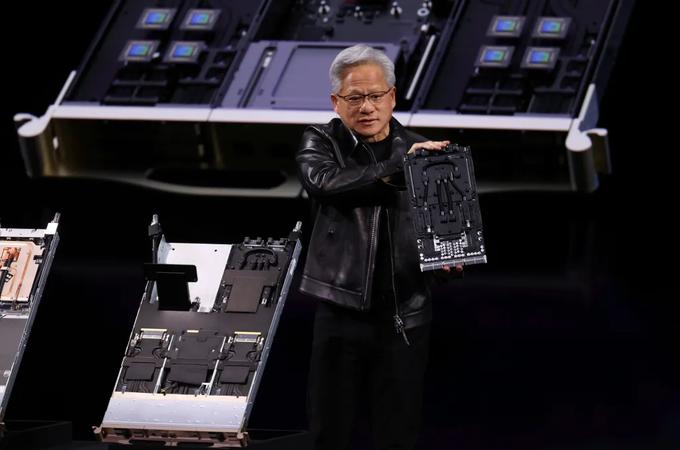
Recent research suggests that the leading open-weight AI models from Chinese companies were trained on Nvidia chips that the US government had specifically restricted from being shipped to China. This apparent widespread access to Blackwell GPUs among Chinese frontier labs highlights the scale of the challenge facing Nvidia as the dominant chip designer.
This week, Nvidia CEO Jensen Huang departed the company after admitting to an affair with Alice Huang, an executive at Megaspeed—a firm implicated in smuggling Nvidia chips into China. Alice Huang has also been alleged to be an agent of China's intelligence service. While Jensen Huang's relationships with a customer and two employees have attracted the most public attention, Nvidia's potential corporate liability for export control violations likely played a role in the decision to part ways with Huang.
US export controls are designed to safeguard America's leadership in AI capabilities against China, but Huang has long pushed to open up that market. Blackwell GPUs are prohibited from export to China or Chinese-owned firms, while the Trump administration permits Nvidia to export the H200—a less powerful chip—provided shipments follow a circuitous route that allows the US to claim a 25% tariff.
EMBED_PLACEHOLDER_0
Will DePue, a former OpenAI researcher who leads the nonprofit research group Unemployment Labs, analyzed the weights—the unique structure—of large language models released openly by DeepSeek, Moonshot AI, MiniMax and Ant Group. The weights still reflect the configurations of the chips used to train them, and DePue found compelling evidence that the most closely watched models, including Moonshot's Kimi K3 releases and DeepSeek's V4 models, bear fingerprints from training on Blackwell chips. White House technology adviser Michael Kratsios said earlier this year that Moonshot had used export-banned Nvidia chips, citing US intelligence sources.
Epoch AI, a nonprofit research organization, estimates that about two million advanced chips entered China in 2024 and 2025 through schemes designed to hide their final destination. That doesn't mean these models were trained entirely on Nvidia chips, or that export control laws were necessarily violated; the chips could have been in an offshore data center—a popular way for Chinese firms to access compute that has driven an industrial revolution in Malaysia. Epoch's data estimates that 275,000 Nvidia AI accelerators were imported to Malaysia in 2024 and 2025. However, the ostensible goal of the export bans is to prevent exactly that: Chinese AI labs training on the most powerful chips. China hawks have long called for stronger controls on who uses chips, not just who owns them or where they are installed.
"If we care about the U.S. [maintaining its lead], we need to track where the compute goes," DePue said.
Megaspeed, the company led by Alice Huang, has been at the center of that trade for several years through its subsidiary Speedmatrix, and has been the subject of investigations by both the US and Singaporean governments. On Friday, Bloomberg also reported that a company with links to Alice Huang was involved in smuggling banned Nvidia chips to a data center in Shanghai.
In May, the short-selling research firm Culper published a report arguing that Nvidia had a "China problem" because a significant share of its revenue was driven by Chinese demand—either through remote data centers or smuggling in violation of US law. It detailed Megaspeed's relationship with Nvidia and alleged that Alice Huang's companies are backed by Chinese firms barred from accessing US chips. Ironically, Culper's bet against Nvidia wasn't driven by the expectation of a US government crackdown. Instead, it focused on the Chinese government's response to the bans: a recommitment to its domestic chip industry. If China succeeds, billions of dollars in Chinese demand for Nvidia chips could dry up.
Some 600,000 H200 chips are reportedly stockpiled in Hong Kong, awaiting shipment into China. While Chinese companies might want the chips, observers have no consensus on why they haven't been cleared for import. Graham Webster, a research scholar at Stanford who focuses on US-China technology policy, said he doesn't buy the idea that holding the chips back would drive domestic production, since demand for chips is so large. Other theories for the hold-up include preparation for a potential trade deal involving a large volume of US goods, or concerns about potential surveillance technology in the chips.
For now, US companies have limited obligations to track what their customers do with controlled goods like AI chips. However, Jensen Huang's personal and professional entanglements with Alice Huang create a much bigger problem for Nvidia if government investigators confirm that chip smuggling took place and that he was aware of it. Nvidia and Huang have both vouched for Megaspeed's data centers, saying Nvidia officials had visited them to confirm they were legitimate.
The US government's treatment of Nvidia and Megaspeed is also under scrutiny. Secretary of Commerce Howard Lutnick, who oversees the agencies that license chip exports, could reportedly lose his job after reports that his investigators failed to uncover suspicious chip buyers and were too cozy with Nvidia officials.
RELATED ARTICLES



Comments
Please log in to leave a comment.

No comments yet. Be the first to comment!