Democrats' Midterm Wins Threaten Data Center Expansion, Meta President Warns
By admin | Nov 05, 2026 | 3 min read
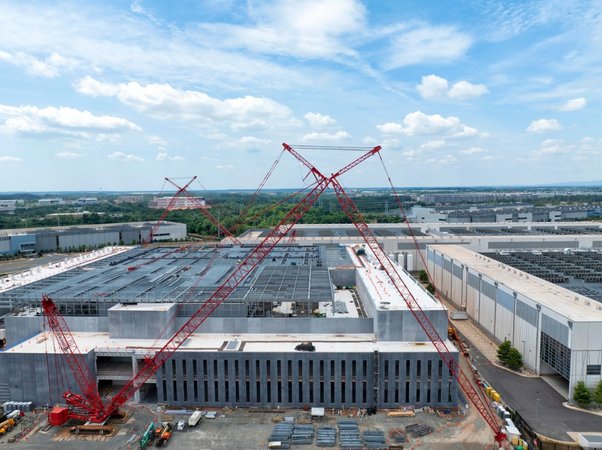
Meta President Dina Powell McCormick warned that Democratic victories in the midterm elections will significantly complicate companies' efforts to build data centers. She acknowledged that the industry has "not done as good a job as we needed to explain the benefits of these investments."
Speaking Wednesday at the WSJ Tech conference, the Meta executive noted that opposition to data centers—which featured prominently on ballots this election season—was also connected to broader public sentiment about AI technology. "The visible sort of manifestation of AI is a data center, and it's something that people can say, 'I don't want this in my community,'" she explained. "I think there's an underlying bigger issue, which is how people feel about AI in general."
Meta believes it could reverse negative consumer attitudes toward AI by demonstrating the value—not just of the data centers arriving in local communities, but of the technology itself. "The stakes of who builds the technology that cures cancer, that gives access to education, that is also a very fundamental difference…Mark [Zuckerberg, Meta CEO] is very 'long human,' and he's betting on humans more than machines," Powell McCormick explained. "And that's what we mean when we say the future is for everyone. That people should not be left behind. But the way to ensure that is that this technology is democratized, that people have access to it in a very fair and transparent way," she said.
The executive also highlighted Meta's two decades of experience building data centers, noting that the company requires substantial compute power to deliver its social networking products. Today, she said, the company operates data centers in 23 states, with five—including one in Texas—planned as projects of one gigawatt or more.
But Meta now fears it could lose some of its investments after politicians campaigned on anti-data-center platforms during the midterms. "I think it's going to be harder," Powell McCormick said, describing the future of data center construction. "It has been hard, I should say, but I also think that it's becoming clear what models work, and the states want those models that work."
She explained that communities only welcome data centers when they benefit them in some way, outlining Meta's current approach to securing local deals. Successful projects involve Meta paying for its own electricity, directing tax surpluses from the data centers toward teachers and first responders, keeping the workforce local, and securing bipartisan support for the project, among other factors. Looking ahead, she expects data center projects to face increased scrutiny and be evaluated based on whether constituents actually want them.
Meta has pinned its hopes on its AI investments—particularly its consumer AI agent Muse scaling far beyond its current 10 million users—to become a business that one day serves billions. But even if that doesn't materialize, the company believes its data center investments won't be wasted, as the compute itself will hold value. "We're getting calls every day to lease that compute [we've built], and so one way or another, we're seeing a path to monetization," Powell McCormick said.
RELATED ARTICLES

Comments
Please log in to leave a comment.

No comments yet. Be the first to comment!