NASA Reveals Nancy Grace Roman Space Telescope Launch 8 Months Early, Set to Deliver 20,000 TB of Data
By admin | Apr 23, 2026 | 2 min read
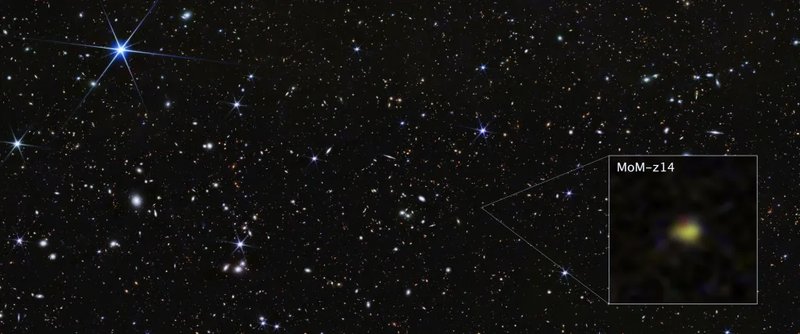
NASA has confirmed that the Nancy Grace Roman Space Telescope will launch into orbit in September 2026, eight months earlier than originally planned. Over its operational lifetime, this new observatory is projected to generate 20,000 terabytes of data for astronomers. To put that in perspective, the James Webb Space Telescope, which began operations in 2021, already transmits 57 gigabytes of stunning imagery down to Earth each day. Later this year, the Vera C. Rubin Observatory in the Chilean mountains will begin a survey expected to collect 20 terabytes of data every single night. By comparison, the Hubble Space Telescope—once considered the benchmark—delivers just 1 to 2 gigabytes of sensor readings daily.
It has been years since astronomers manually combed through all this information. Like anyone faced with massive datasets, they are now turning to graphics processing units (GPUs) to tackle the challenge. Brant Robertson, an astrophysicist at UC Santa Cruz, has witnessed this transformation firsthand while supporting or utilizing data from these missions. For the past 15 years, he has collaborated with Nvidia to apply GPUs to space-related problems—initially using advanced simulations to test theories about supernova explosions, and more recently developing tools to handle the flood of data from the newest observatories.
Robertson and his then-graduate student Ryan Hausen created a deep learning model called Morpheus, which can process large datasets and identify galaxies. Their early AI analysis of Webb data revealed an unexpected number of a particular type of disc galaxy, adding a new dimension to theories about the universe's evolution. Now, Morpheus is evolving: Robertson is shifting its architecture from convolutional neural networks to the transformer models that underpin large language models. This change will allow the model to analyze several times more area than it currently can, significantly accelerating its work.
EMBED_PLACEHOLDER_0
Robertson is also developing generative AI models trained on space telescope data to enhance observations from ground-based telescopes, whose images are distorted by Earth's atmosphere. While rocket technology has advanced, launching an 8-meter mirror into orbit remains challenging, so using software to improve the Rubin Observatory's observations is the next best option. However, Robertson feels the pressure of global demand for GPU access. He used funding from the National Science Foundation to build a GPU cluster at UC Santa Cruz, but it is already becoming outdated as more researchers seek to apply compute-intensive methods to their work. The Trump administration has proposed cutting the NSF's budget by 50% in its current budget request.
"People want to do these AI, ML analyses, and GPUs are really the way to do that," Robertson said. "You have to be entrepreneurial…especially when you’re working kind of at the edge of where the technology is. Universities are very risk averse because they just have constrained resources, so you have to go out and show them that, 'look, this is where we’re going as a field.'"
RELATED ARTICLES

Comments
Please log in to leave a comment.

No comments yet. Be the first to comment!